
Types of engine replacement warranties: 2026 guide

An engine replacement warranty is a contractual guarantee that covers the cost of repairing or replacing a failed engine or its components within a defined period. The three primary types of engine replacement warranties are parts-only, parts-and-labour, and nationwide no-fault coverage. Each type carries a different cost, scope, and risk profile. Choosing the wrong one can leave you with a large bill even when a claim is technically valid. Whether you are a daily driver, a mechanic, or a fleet operator, understanding these warranty categories is the first step toward protecting your investment.
1. What are the types of engine replacement warranties?
Three distinct warranty types cover aftermarket engine replacements: parts-only, parts-and-labour, and nationwide no-fault. Each suits a different buyer profile and budget. Parts-only is the most affordable entry point but carries the highest financial exposure. Parts-and-labour is the most balanced option for daily drivers. Nationwide no-fault is the broadest coverage available and suits high-mileage or commercial users.
The type of warranty a supplier offers also signals the quality of their workmanship. Comprehensive parts and labour warranties indicate the rebuilder uses high-quality components and strict quality controls. A minimal or no-warranty offer shifts all financial risk to the buyer and often reflects shortcuts in the rebuild process. Checking warranty type before purchasing an engine is as important as checking the engine specification itself.

2. Parts-only engine replacement warranties
A parts-only warranty covers the cost of defective components but pays nothing toward the labour required to remove, inspect, or reinstall the engine. This is the most common entry-level warranty option and the one most likely to surprise buyers at claim time. Labour for an engine removal and reinstall can run into thousands of dollars at a professional workshop, none of which is covered.
Parts-only warranties typically include these conditions and exclusions:
- Coverage applies only to manufacturing defects in the supplied parts
- No reimbursement for diagnostic fees, towing, or machining costs
- Claims usually require the engine to be returned to the supplier for inspection
- Consequential damage caused by the failed part is often excluded
- Coverage periods tend to be shorter than parts-and-labour options
This warranty type suits buyers who are qualified mechanics, have access to a workshop, and can perform the labour themselves at no cost. It also works for budget-conscious buyers who accept the risk of paying labour out of pocket if a fault occurs. For anyone relying on a commercial workshop, the financial exposure is significant.
Pro Tip: Before accepting a parts-only warranty, get a written labour rate estimate from your mechanic. Compare that figure against the engine price. If labour exceeds 40% of the engine cost, understanding exactly what your warranty covers becomes even more important.
3. Parts-and-labour warranties: the most balanced engine warranty option
A parts-and-labour warranty covers both the replacement components and a defined amount of labour reimbursement when a covered fault occurs. This coverage type is widely regarded as the best balance for daily-driven vehicles. It removes the largest single cost risk from the buyer and reflects genuine confidence from the engine supplier in their product.
Coverage under a parts-and-labour warranty typically includes:
- Replacement of defective engine components at no cost to the owner
- Labour reimbursement up to a specified dollar cap or hourly rate
- Coverage at approved repair facilities or any licensed workshop, depending on the policy
- Defined warranty periods, often 12 months or more for remanufactured engines
- Some policies extend to towing or hire car costs during the repair period
The critical detail most buyers miss is the labour rate cap. Some policies set low caps that force owners to pay the difference between the warranty payout and the actual workshop rate. A warranty that reimburses $80 per hour is worth far less in a city where workshop rates average $150 per hour. Always request the exact dollar cap and compare it against local labour rates before signing.
Remanufactured engines with strong parts-and-labour coverage are a sound choice for vehicles used daily. Jasper Engines and Transmissions, for example, offer 3-year/100,000-mile warranties on remanufactured engines, which reflects the confidence that quality rebuilders place in their work. Checking the warranty coverage details before purchase tells you exactly what you are buying.
Pro Tip: Ask the supplier for the maximum labour reimbursement amount in writing, not just the hourly rate. A low hourly cap on a complex engine swap can still leave you hundreds of dollars out of pocket.
4. Nationwide no-fault engine replacement warranties
A nationwide no-fault warranty is the broadest engine replacement coverage available. It covers defects regardless of where the failure occurs and allows repairs at any authorised workshop across the country. This warranty type reduces claim friction and minimises downtime, which makes it the preferred option for drivers who travel frequently or operate vehicles across multiple locations.
Key features of nationwide no-fault coverage include:
- Claims accepted at any approved repair facility, not just the point of sale
- No requirement to prove fault origin before a claim is accepted
- Reduced paperwork and faster repair authorisation compared to standard policies
- Geographic flexibility suited to interstate travel or multi-site fleet operations
- Higher premium cost than parts-only or parts-and-labour options
The cost premium is real. Nationwide no-fault warranties cost more upfront, but the value becomes clear when a failure occurs 1,000 kilometres from home. Without this coverage, the owner must either transport the vehicle back to an approved repairer or pay all costs out of pocket. For commercial operators, the cost of downtime alone often exceeds the warranty premium many times over.
Fleet managers running vehicles across Queensland, New South Wales, and Victoria, for instance, benefit directly from the repair location flexibility. A truck or van that breaks down in a regional area can be repaired locally without a lengthy approval process. That speed directly protects revenue and delivery schedules.
5. How commercial fleet engine warranties differ from personal vehicle warranties
Commercial fleet warranties operate on a fundamentally different basis to personal vehicle warranties. Commercial operators depend on uptime, predictable costs, and uninterrupted service. A personal warranty is designed to protect an individual from unexpected repair costs. A fleet warranty is a risk management and budgeting tool built around operational continuity.
Fleet engine warranties typically extend well beyond the engine block itself. Commercial truck coverage often includes emissions systems such as diesel particulate filters, selective catalytic reduction, exhaust gas recirculation, and diesel exhaust fluid systems. Fuel systems, transmissions, and electrical modules are also commonly included. This breadth reflects the high cost of failure in these systems.
| Coverage area | Personal vehicle warranty | Commercial fleet warranty |
|---|---|---|
| Engine internals | Yes | Yes |
| Emissions systems (DPF, SCR, EGR) | Rarely | Commonly included |
| Fuel system components | Limited | Often included |
| Transmission | Sometimes | Often included |
| Electrical modules | Rarely | Often included |
| Downtime cost protection | No | Sometimes included |
Fleet managers use warranty coverage as a tool to stabilise budgets and control costly, unpredictable repairs. Emissions-related repairs alone can exceed $3,000 to $8,500 annually per truck without coverage. That figure makes comprehensive fleet warranty coverage a straightforward financial decision for any operator running more than a handful of vehicles.
6. Key considerations when choosing an engine replacement warranty
The right engine warranty option depends on how you use the vehicle, where you drive, and who performs your servicing. Several factors determine whether a warranty delivers real value or just looks good on paper.
Labour reimbursement terms are the most overlooked factor. A long warranty period means little if the labour cap is too low to cover actual repair costs. Always confirm the maximum reimbursement amount and compare it against workshop rates in your area before committing.
Maintenance compliance is non-negotiable. Without documented proof of adherence to the manufacturer’s maintenance schedule, claims for engine failure are frequently denied. Keep every service receipt, oil change record, and inspection report. A claim without supporting records is almost always rejected, regardless of whether the failure was a genuine manufacturing defect.
Other factors worth checking before you sign:
- Warranty length: 12 months is a minimum; 24–36 months is preferable for remanufactured engines
- Geographic coverage: confirm whether repairs are limited to the supplier’s network or open to any licensed workshop
- Repair network availability: a wide network matters most for vehicles used outside major cities
- Transferability: some warranties transfer to a new owner, which adds resale value
Pro Tip: A warranty is a direct reflection of the rebuilder’s confidence in their work. If a supplier is reluctant to offer parts-and-labour coverage or limits the warranty to 90 days, treat that as a quality signal, not just a cost-saving measure.
The replacement engine buying checklist at Engine Zone covers these warranty evaluation points alongside fitment and specification checks, which is a practical starting point before any purchase.
| Warranty type | Parts covered | Labour covered | Best suited for |
|---|---|---|---|
| Parts-only | Yes | No | DIY mechanics, budget buyers |
| Parts-and-labour | Yes | Yes (capped) | Daily drivers, remanufactured engines |
| Nationwide no-fault | Yes | Yes | Frequent travellers, commercial fleets |
Key takeaways
The most effective engine replacement warranty covers both parts and labour, with a labour cap that matches real workshop rates in your area.
| Point | Details |
|---|---|
| Three core warranty types | Parts-only, parts-and-labour, and nationwide no-fault each suit different buyers and budgets. |
| Labour caps matter most | A long warranty period loses value if the labour reimbursement cap is too low to cover actual repair costs. |
| Maintenance records are critical | Claims are frequently denied without documented proof of scheduled servicing and oil changes. |
| Fleet warranties are broader | Commercial coverage extends to emissions systems, fuel systems, and transmissions, not just engine internals. |
| Warranty quality signals workmanship | Suppliers offering comprehensive coverage demonstrate confidence in their rebuild quality. |
What I have learned from years of watching warranty claims go wrong
Most vehicle owners read the warranty period and stop there. That is the single most expensive mistake I see repeated. The number of months on a warranty document tells you almost nothing about its real value. The labour cap, the approved repairer network, and the maintenance compliance clause are where warranties are won or lost.
I have seen owners with 36-month warranties walk away from a claim with nothing because they could not produce a single oil change receipt. The engine failed due to a genuine manufacturing defect, and the claim was still denied. That outcome is not unfair from the supplier’s perspective. It is exactly what the fine print says will happen. The lesson is simple: keep every service record from the day the engine is installed.
My honest recommendation for most daily drivers is a parts-and-labour warranty with a labour cap of at least $100 per hour and a minimum 24-month term. For anyone running a vehicle commercially or travelling interstate regularly, nationwide no-fault coverage is worth the extra cost. The crate engine vs rebuilt engine comparison is also worth reading before you decide on an engine type, because the warranty options available often differ significantly between the two.
Do not let a low sticker price on a parts-only warranty convince you it is the economical choice. If the engine fails and you are paying a workshop $2,000 in labour with zero reimbursement, the cheaper warranty cost you far more than the premium option would have.
— Jason
Engine Zone: engines with clear warranty coverage for Hyundai and Kia owners
Engine Zone supplies new and tested crate engines for Hyundai and Kia vehicles across Australia, with transparent warranty inclusions listed on every product. Each engine comes with documented fitment guarantees and performance testing, so you know exactly what coverage applies before the engine leaves the warehouse.
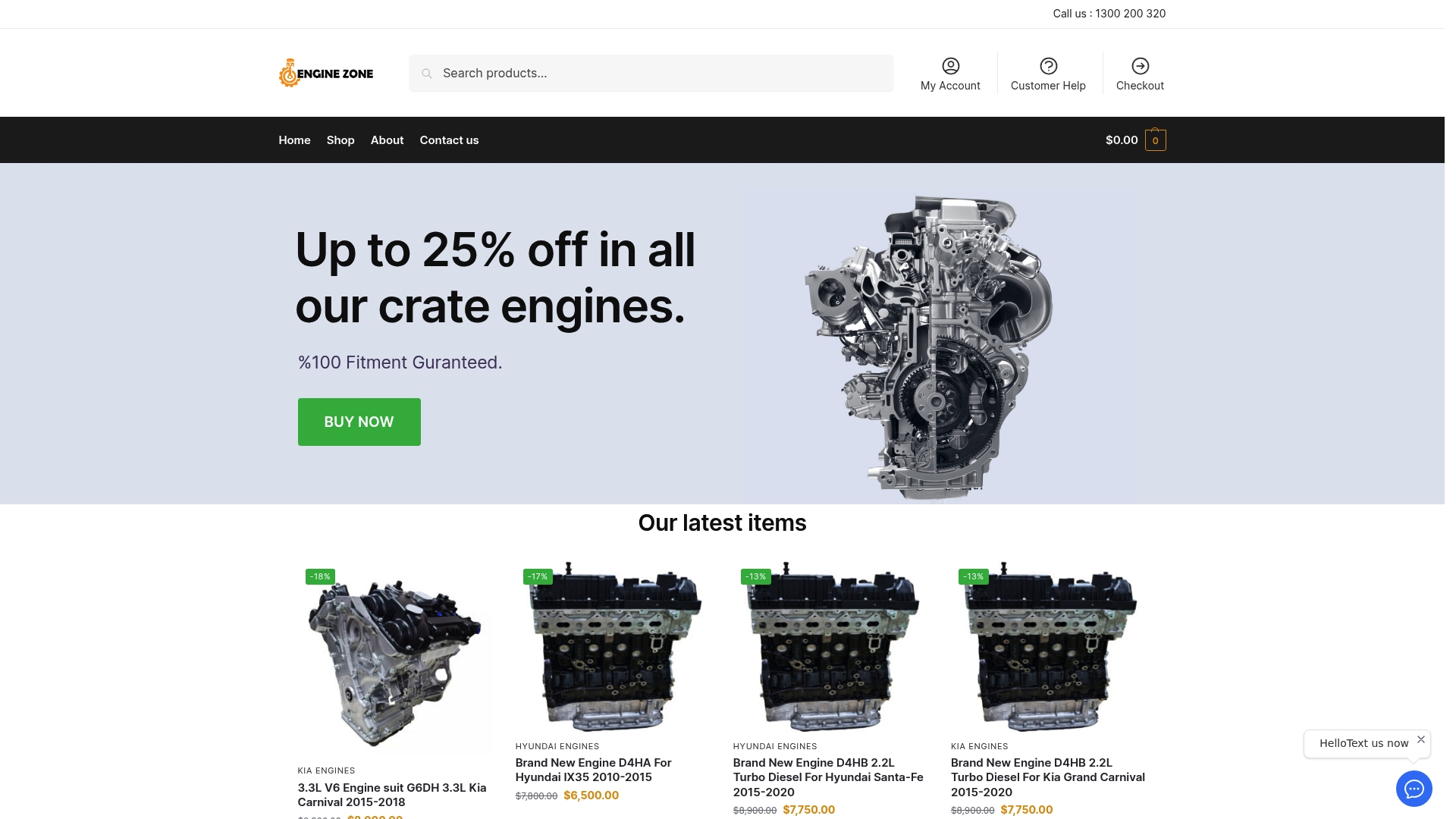
If you are weighing up your engine options, the how to choose a crate engine guide covers warranty inclusions, fitment compatibility, and specification matching in plain language. Engine Zone also offers free shipping across Australia and up to 25% off selected engines, with SSL-secured checkout and expert fitment support available for every order. Explore the full range of Hyundai and Kia engines to find the right fit with the right coverage.
FAQ
What are the three main types of engine replacement warranties?
The three main types are parts-only, parts-and-labour, and nationwide no-fault. Parts-and-labour coverage is widely considered the best balance for daily-driven vehicles.
Why does the labour cap matter in an engine warranty?
Labour caps set the maximum hourly reimbursement the warranty pays toward repair costs. Low caps force owners to pay the difference between the warranty payout and the actual workshop rate, which can amount to hundreds of dollars per claim.
Can a warranty claim be denied even if the engine has a genuine defect?
Yes. Claims are frequently denied when the owner cannot provide documented proof of adherence to the manufacturer’s maintenance schedule, regardless of the defect’s origin.
What does a commercial fleet engine warranty cover that a personal warranty does not?
Commercial fleet warranties commonly extend to emissions systems, fuel systems, transmissions, and electrical modules. Personal vehicle warranties rarely include these components, which are among the most expensive to repair in heavy vehicles.
How do I know if a warranty reflects good engine quality?
Suppliers offering comprehensive parts-and-labour coverage signal confidence in their workmanship and components. A minimal or short-term warranty often indicates quality shortcuts that shift financial risk to the buyer.