
How engine replacement planning works in fleets

Engine replacement planning in fleet management is a data-driven process for deciding when, how, and at what cost to swap or rebuild engines across a vehicle fleet. Fleet managers who treat this as a reactive task face new vehicle lead times exceeding 12 months and budget shocks from unplanned breakdowns. The industry term for this discipline is fleet lifecycle management, and it draws on predictive maintenance data, total cost of ownership modelling, and telematics platforms such as FleetRabbit to forecast engine end-of-life with accuracy. Getting it right means fewer vehicles sitting idle, lower repair bills, and a fleet that stays productive year-round.
How does engine replacement planning work in fleets?
Fleet engine replacement planning works by combining utilisation data, maintenance history, and cost thresholds to schedule engine swaps before failure occurs. The goal is to replace or rebuild at the point where continued operation costs more than the replacement itself. This is preventive engine replacement fleet planning in practice, and it replaces the old model of running engines until they fail.

Key metrics fleet managers track
Fleet managers monitor several data points to judge engine health and replacement timing:
- Utilisation rate: Hours and kilometres logged per week against the engine’s rated service life.
- Maintenance history: Frequency of oil consumption spikes, coolant loss, and unscheduled repairs.
- Fuel efficiency trend: A sustained drop in fuel economy signals internal wear before catastrophic failure.
- Residual vehicle value: Replacing an engine in a vehicle with low resale value rarely makes financial sense.
- Cost per kilometre: When repair costs per kilometre climb above a defined threshold, replacement becomes the better option.
Telematics platforms and OBD sensors feed this data in real time. Tools like FleetRabbit aggregate sensor readings and flag engines approaching critical wear thresholds. AI-driven scheduling uses OBD data and historical trends rather than age benchmarks alone, which is a meaningful shift from fixed-interval thinking.
Pro Tip: Set automated alerts in your telematics platform when cost per kilometre crosses your defined trigger point. Waiting for a driver report adds days of unnecessary delay.
Mileage bands provide a useful starting framework. Light-duty delivery vans typically reach replacement territory at 180,000–250,000 miles, medium-duty trucks at 250,000–350,000 miles, and heavy-duty trucks often require earlier intervention based on load cycles rather than distance alone. These bands are a starting point, not a rule. Operational context always overrides averages.
Rebuild versus replace: how do you decide?
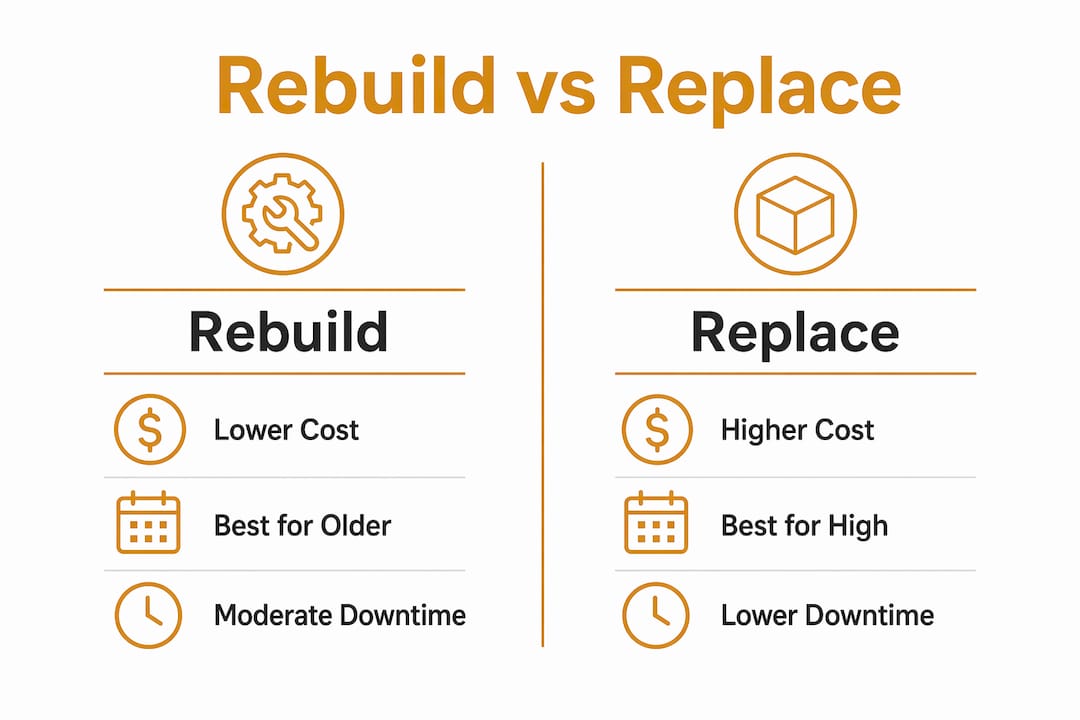
The rebuild versus replace decision is the financial core of any fleet engine replacement process. Both paths carry significant costs, and choosing the wrong one erodes fleet profitability quickly.
| Factor | Rebuild | Replace |
|---|---|---|
| Typical cost | $20,000–$30,000 | $40,000–$50,000 |
| Best suited for | Engines with sound block, low vehicle age | High-mileage vehicles, repeated failures |
| Downtime | Longer (weeks in shop) | Shorter with crate engine swap |
| Risk | Residual wear on other components | Higher upfront cost |
| Parts availability | Dependent on supplier network | Broader options with remanufactured units |
Replacement is advised when repair costs exceed 50% of the vehicle’s post-repair value, or when maintenance costs per mile exceed $0.18. These thresholds exist because beyond those points, the vehicle consumes more in repairs than it generates in productive output.
A used engine swap sits between these two options. It works as a bridge solution when a vehicle has remaining revenue life but a full replacement is not yet justified. The risk is parts availability and unknown wear history. Dealer network depth and confirmed local inventory matter more than upfront price in this scenario. A cheap engine that takes three weeks to arrive costs far more in lost productivity than a slightly pricier unit available the next day.
Total cost of ownership modelling ties this together. TCO accounts for fuel savings, improved uptime, reduced towing costs, and fewer missed deliveries after a repower. Engine replacement improves uptime and reliability in ways that simple fuel cost calculations miss. Fleet managers who use an engine replacement vs repair checklist before committing to either path make better decisions with less guesswork.
Pro Tip: Run your TCO model with three scenarios: rebuild, replace with remanufactured, and replace with new. The cheapest upfront option is rarely the cheapest over 24 months.
What are the best practices for scheduling engine swaps?
Scheduling is where fleet engine lifecycle planning either saves or costs money. Poor scheduling creates simultaneous downtime across multiple vehicles, which compounds lost revenue and inflates labour costs.
-
Stagger replacements across the fleet. Never schedule more than one engine swap per vehicle class in the same week. Simultaneous downtime multiplies the operational impact and strains workshop capacity.
-
Align swaps with routine maintenance windows. An engine replacement scheduled alongside a major service reduces the number of separate workshop visits. This cuts total downtime per vehicle across the year.
-
Batch similar jobs together. Grouping vehicles with the same engine type allows mechanics to work in a rhythm, reducing per-unit labour time and avoiding overtime costs.
-
Pre-order remanufactured engines early. Supply chain lead times for quality remanufactured units can stretch weeks. Ordering ahead of the scheduled swap date prevents the vehicle from sitting idle waiting for parts.
-
Pre-approve core engine returns before the swap begins. Poor core logistics add days to downtime and create billing complications. Standardising your core return process with your supplier removes this friction entirely.
-
Track post-replacement performance metrics. Record fuel efficiency, oil consumption, and unscheduled repair frequency after each swap. This data refines future scheduling decisions and validates whether rebuild or replace was the right call.
Understanding engine replacement downtime in detail helps fleet managers build realistic scheduling buffers. Off-peak scheduling, such as replacing engines during low-demand periods in january or february, reduces the revenue impact of planned downtime significantly.
Pro Tip: Build a 12-month engine replacement calendar at the start of each financial year. Plotting all anticipated swaps against your operational calendar reveals conflicts before they become crises.
How do advanced technologies improve fleet engine replacement decisions?
AI and digital twin technologies are changing how fleet managers approach engine replacement strategies. Fixed-interval maintenance schedules are being replaced by condition-based models that respond to real engine data.
- AI failure prediction: AI analyses OBD sensor data, historical repair records, and operational patterns to predict engine failure weeks before it occurs. This moves planning from reactive to genuinely preventive.
- Digital twin modelling: A digital twin is a virtual model of a specific engine that mirrors its real-world condition. Fleet managers use digital twins to test whether an engine can safely extend its service life or needs immediate replacement, without risking a breakdown.
- Fleet-wide part optimisation: Selective engine part swaps and resting certain engines based on real-time data maximises both operational and financial efficiency across the whole fleet, not just individual vehicles.
- Financial modelling integration: Modern optimisation integrates financial modelling with operational data to balance lifecycle costs and maximise enterprise value. This is a CFO-level view applied to workshop decisions.
AI-driven fleet management and digital twins improve replacement timing accuracy by 18–25%, avoiding $1,200–$3,400 in costs per vehicle annually.
That figure compounds quickly across a fleet of 50 or 100 vehicles. The technology pays for itself within the first replacement cycle for most medium-to-large fleets. Proactive, data-driven planning prevents budget spikes and reduces costly emergency downtime by forecasting needs years ahead. Fleet managers who adopt these tools gain a measurable financial advantage over those still relying on mileage-based rules alone.
Key takeaways
Effective fleet engine replacement planning requires data, timing, and logistics working together to reduce downtime and control costs across the full vehicle lifecycle.
| Point | Details |
|---|---|
| Use cost thresholds as triggers | Replace when repair costs exceed 50% of post-repair value or $0.18 per mile. |
| TCO beats upfront price | Model rebuild, remanufactured, and new replacement costs over 24 months before deciding. |
| Stagger and schedule early | Plan swaps 12 months ahead and batch similar jobs to cut labour costs and avoid simultaneous downtime. |
| Pre-approve core logistics | Sort core return processes with your supplier before the swap begins to avoid billing delays and added downtime. |
| AI improves timing accuracy | AI and digital twin tools improve replacement timing by 18–25%, saving thousands per vehicle annually. |
Why reactive planning is the most expensive mistake I see fleet managers make
Fleet managers who wait for a warning light or a breakdown to trigger an engine replacement are not saving money. They are deferring a known cost until it arrives at the worst possible moment, with no supplier lined up, no workshop slot booked, and no budget allocated.
The multi-year outlook is the single biggest differentiator between fleets that control their costs and those that are controlled by them. Supply chain pressures are real. New vehicle costs on Class 8 trucks have risen by $10,000 or more in recent cycles, and lead times stretch beyond 12 months. A fleet manager who plans two years ahead can negotiate better pricing, secure inventory, and schedule around operational peaks.
Average mileage benchmarks are a trap without operational context. A delivery van running city routes accumulates wear differently from one covering regional highways at the same odometer reading. Driver feedback and post-replacement performance data fill the gap that mileage figures leave open. I have seen fleets extend engine life by 40,000 kilometres simply by acting on driver reports of subtle performance changes that sensors had not yet flagged.
Core logistics is the detail most managers overlook until it bites them. A three-day delay on a core return approval can add $2,000 or more in lost revenue for a commercial vehicle. Sorting that process in advance costs nothing. Neglecting it costs plenty.
Engine replacement, done with proper planning, is not a disruption. It is a scheduled investment that improves reliability, driver satisfaction, and fleet residual value simultaneously.
— Jason
Engine Zone’s crate engine range for fleet operators
Fleet operators who need reliable replacement engines with fast turnaround will find Engine Zone’s range built for exactly that purpose.
Engine Zone stocks new and remanufactured crate engines for Hyundai and Kia vehicles, with fitment guarantees and free shipping across Australia. The benefits of new crate engines include reduced downtime, known wear history, and warranty coverage that remanufactured units cannot always match. Fleet operators can use the crate engine selection guide to match engine specifications to their exact vehicle requirements before ordering. Engine Zone also provides an installation checklist to support workshop teams through the swap process. Contact Engine Zone directly for fleet pricing and availability on bulk orders.
FAQ
What triggers an engine replacement in a fleet vehicle?
Replacement is triggered when maintenance costs exceed $0.18 per mile or repair costs surpass 50% of the vehicle’s post-repair value. Sustained fuel efficiency drops and repeated unscheduled repairs are also reliable indicators.
How far in advance should fleet managers plan engine replacements?
Fleet managers should plan engine replacements at least 12 months ahead, and ideally within a two-year rolling forecast. Supply chain lead times and budget cycles make earlier planning the lower-risk approach.
Is a rebuild always cheaper than a full engine replacement?
A rebuild costs $20,000–$30,000 versus $40,000–$50,000 for a replacement, but total cost of ownership often favours replacement. Rebuilds carry residual wear risk and longer workshop time, which adds hidden downtime costs.
How does AI improve engine replacement timing for fleets?
AI analyses OBD sensor data and historical repair trends to predict failures before they occur. This improves replacement timing accuracy by 18–25% and avoids $1,200–$3,400 in costs per vehicle annually.
What is the biggest logistics mistake in fleet engine swaps?
Failing to pre-approve core engine return conditions before the swap begins is the most common logistics error. Poor core management adds days to downtime and creates billing disputes that delay vehicle return to service.