
Engine replacement job quoting guide for 2026
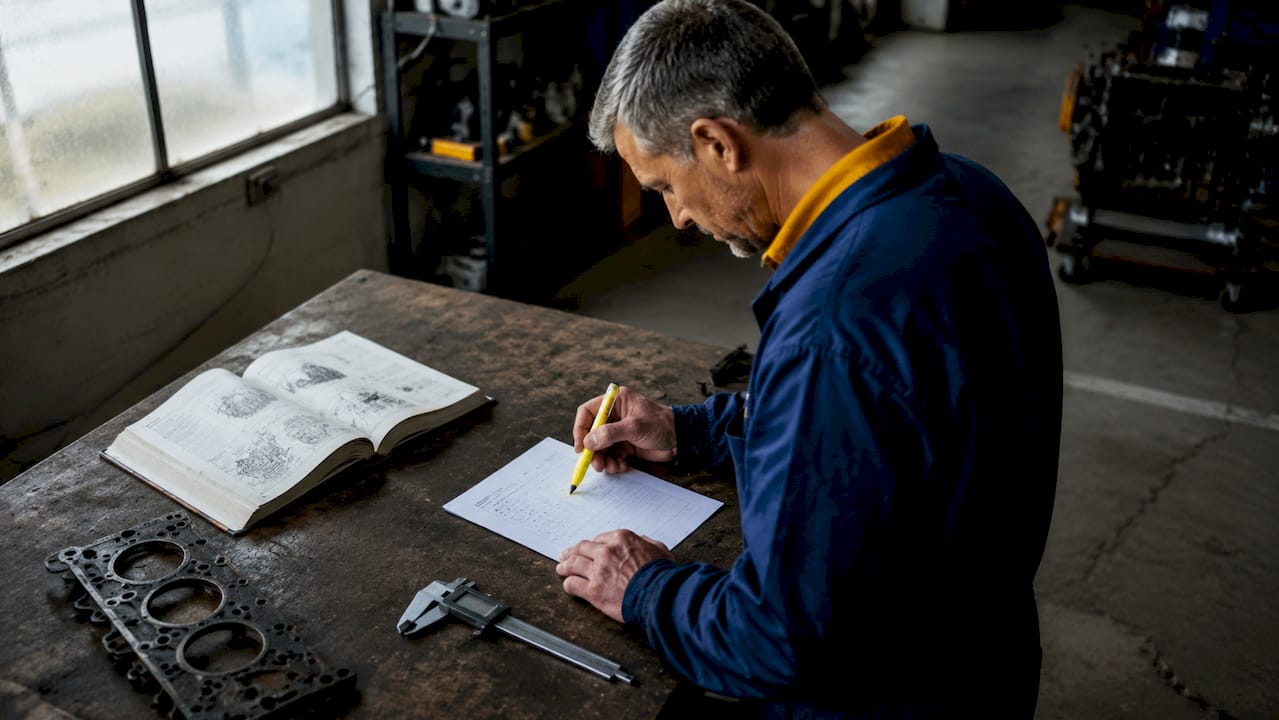
An engine replacement job quoting guide is the structured framework automotive professionals and vehicle owners use to build precise, legally sound estimates that cover every cost before a spanner turns. Done properly, a quote for engine replacement covers the engine unit itself, labour hours, OEM wear parts, sublet work, GST, and warranty terms. Engine replacement costs range from $2,000 to $10,000 depending on vehicle make, engine type, and parts availability. That spread is exactly why a thorough, itemised estimate protects both the workshop and the customer from costly surprises.
What does a complete engine replacement quote include?
A complete engine swap quote guide covers six distinct cost categories. Miss any one of them and you risk a dispute, a loss, or a customer who never returns.
1. Engine unit cost
The engine itself is the largest variable in any engine replacement cost estimate. Three sourcing options exist, each with different price points and warranty periods:
- Used/second-hand engine: $800–$2,500. Typically sold as-is with limited or no warranty. Highest risk of hidden wear.
- Remanufactured engine: $2,000–$5,500. Rebuilt to OEM specification with a warranty, usually 12–24 months. Reliable mid-range choice.
- New OEM or crate engine: $3,500–$8,000+. Full manufacturer warranty, zero unknown wear history. Best long-term value for high-kilometre vehicles.
2. Labour
Labour costs for engine swaps sit between $1,800 and $5,000 for most mainstream vehicles. The exact figure depends on engine configuration and vehicle complexity.

3. OEM wear parts
Timing sets, water pumps, engine mounts, thermostat, coolant, and engine oil are replaced during every professional engine swap. Wear parts add $400–$900 to the total job cost. These must appear as separate line items, not buried inside the labour charge.
4. Sublet work
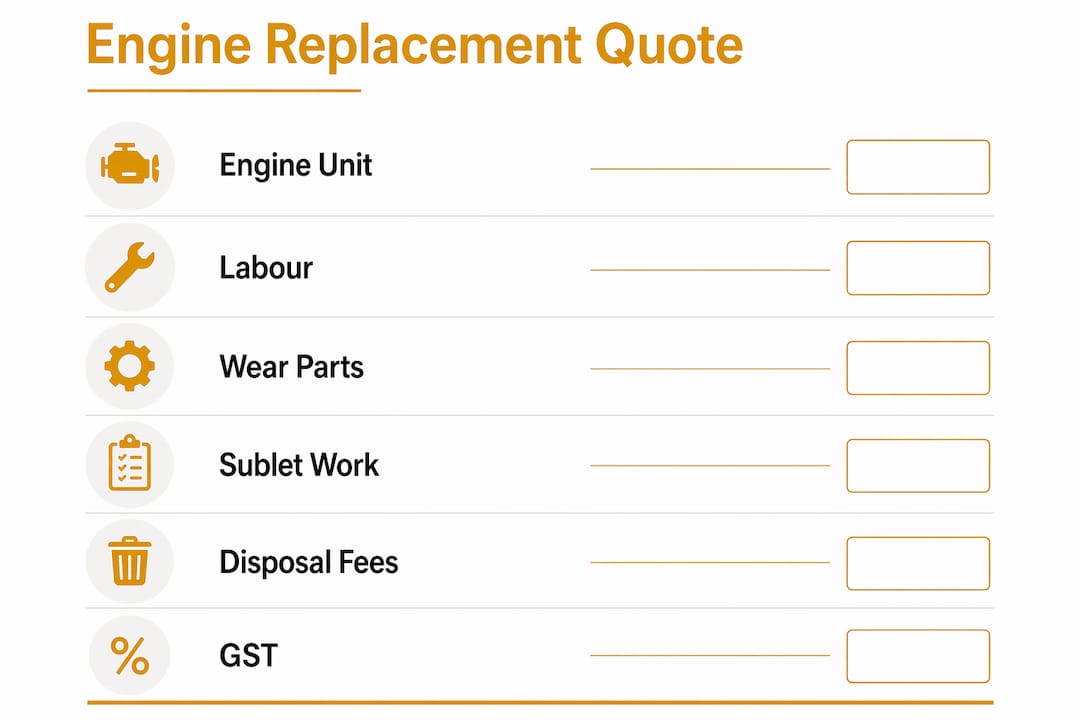
Machining, exhaust welding, or specialist electrical work carried out by a third party must be quoted separately with a clear markup disclosed.
5. Environmental and disposal fees
Old engine oil, coolant, and the core engine unit require compliant disposal. Include a flat fee of $50–$150 to cover this.
6. GST
All Australian workshops must add 10% GST to the taxable supply. Present it as a separate line item on every quote, regardless of whether the customer is a business or private individual.
Typical out-the-door cost range for a full engine swap:
| Engine Type | Engine Unit | Labour | Wear Parts | Total Range |
|---|---|---|---|---|
| 4-cylinder | $2,000–$4,000 | $1,140–$2,080 | $400–$900 | $4,500–$7,500 |
| V6 | $3,000–$6,000 | $1,520–$2,600 | $500–$900 | $5,500–$10,000 |
| V8 | $4,000–$8,000 | $1,900–$3,380 | $600–$900 | $7,000–$13,500 |
Labour calculated at $95–$130/hr. Totals exclude GST.
Pro Tip: Always include a line for “additional findings” with a pre-authorised spend limit. This gives you legal cover to address minor issues discovered mid-job without stopping work to chase customer approval every time.
How do you calculate labour costs for engine replacement in australia?
Labour pricing is where most engine repair job pricing goes wrong. Workshops either underquote hours or forget to capture all billable time, which erodes margin on every job.
Australian automotive workshops charge $95–$130 per hour for mechanical labour, with metropolitan Sydney and Melbourne workshops typically sitting at the top of that range. Regional workshops often price closer to $95–$105/hr to stay competitive. For a full breakdown of how these rates are structured, the 2026 Australian labour rate guide covers local market benchmarks in detail.
Labour hours vary significantly by engine configuration. UseCalcPro’s 2026 data provides the clearest breakdown available:
- 4-cylinder engines: 12–16 hours
- V6 engines: 16–20 hours
- V8 engines: 20–26 hours
These figures assume a straightforward swap on a standard vehicle. Add 2–4 hours for all-wheel-drive systems, turbocharged engines, or vehicles with significant corrosion.
Experienced workshops tune their labour rates dynamically based on local market conditions rather than relying solely on published rate guides. A tool like OneBookPlus lets you input your workshop’s actual overhead costs and target margin to arrive at a defensible hourly rate.
Billable time must capture more than the physical swap. Include pre-job diagnostics, road testing, and any time spent sourcing parts or managing sublet work. Workshops that fail to capture this time consistently undercharge by 10–15% per job.
Pro Tip: Break labour into stages on the quote: removal, installation, ancillary work, and road test. Staged labour line items make it easier to explain the total to customers and harder for them to dispute individual charges.
How do you source and price replacement engines for a quote?
Parts sourcing directly determines both your quote competitiveness and your profit margin. The types of replacement engines available in Australia fall into three clear categories, each suited to different customer budgets and vehicle profiles.
Used engines from wreckers suit older, lower-value vehicles where the owner wants the cheapest possible fix. The risk is unknown wear history. Always inspect compression and oil condition before quoting a used unit into a job.
Remanufactured engines are the professional’s default choice. Suppliers like Repco and Burson Auto Parts stock remanufactured units for common platforms, and most carry a 12-month warranty. These units arrive ready to install with known specifications.
New OEM crate engines offer the cleanest outcome. They carry full manufacturer warranties, arrive with zero kilometres, and reduce diagnostic uncertainty. For Hyundai and Kia vehicles in particular, a certified crate engine removes the guesswork from fitment and warranty coverage.
Parts markup is a legitimate and necessary part of engine repair job pricing. Standard workshop practice applies a 25%–35% markup on parts cost to cover procurement time, warranty liability, and carrying costs. A $4,000 engine unit quoted to the customer at $5,000–$5,400 reflects a standard 25%–35% margin. Always disclose your markup policy in writing if the customer asks.
OEM wear parts must be sourced from reputable suppliers. Timing sets, water pumps, and engine mounts sourced from Repco, Burson, or direct OEM dealers carry known quality standards and warranty backing. Fitting cheap aftermarket wear parts to a new engine voids the engine warranty in most cases. Include this fact in your quote to justify the parts selection.
Before finalising parts costs, use the replacement engine buying checklist to confirm fitment, warranty terms, and delivery lead times. Quoting a part you cannot source within the job timeline creates delays that damage customer trust.
What are the most common engine quote mistakes to avoid?
The most expensive quoting mistakes are not calculation errors. They are structural omissions that create disputes after the job is complete.
- Quoting from memory. Manual quoting errors cause customer distrust and lost business. Every quote must be generated from a documented system, not recalled from a previous similar job.
- Burying wear parts in labour. OEM wear parts must appear as separate line items in every engine swap estimate. When they are hidden inside a labour charge, customers cannot verify what they are paying for.
- Omitting warranty terms. Lowball estimates without clear warranty agreements are a red flag for poor-quality work. Every quote must state the warranty period, what it covers, and what voids it.
- Ignoring vehicle condition. A quote built without a physical inspection is a guess. Rust, prior damage, or non-standard modifications can add 4–8 hours of labour to a job. Inspect first, quote second.
- Failing to document unexpected findings. When additional issues appear mid-job, the workshop needs written customer authorisation before proceeding. A quote that does not include a process for scope changes creates legal exposure.
“A written, itemised estimate supported by a vehicle inspection is both a legal document and a trust-building tool. Workshops that skip this step are one disputed invoice away from a serious problem.” — WorkshopSoftware
Pro Tip: Photograph the engine bay before and after removal. These images protect you if a customer later claims pre-existing damage was caused during the job.
How do you present an engine quote clearly to customers?
Written, itemised estimates build customer confidence and serve as legal protection for the workshop. A quote presented as a single lump sum invites negotiation and distrust. An itemised quote educates the customer on exactly what they are paying for.
A well-structured engine replacement quote should include:
- Vehicle details: make, model, year, VIN, and odometer reading
- Engine unit: type, part number, supplier, and warranty period
- Labour: staged breakdown by task with hours and rate per stage
- Wear parts: each item listed individually with part number and cost
- Sublet work: description, supplier, and quoted cost
- Disposal fees: flat fee with description
- GST: calculated separately and clearly labelled
- Total: pre-GST subtotal and GST-inclusive total
- Validity period: quote valid for 14–30 days, subject to parts pricing changes
Digital quoting tools like WorkshopSoftware generate consistent, professional quotes that pull from a parts database and apply your labour rate automatically. Consistency across quotes reduces the risk of pricing errors and makes it easier to review job profitability after the fact.
For customers comparing multiple quotes, explain that engine warranty coverage varies significantly between suppliers. A cheaper quote using a used engine with no warranty may cost more in the long run than a higher quote using a remanufactured or crate engine with 24-month coverage.
Pro Tip: Send the quote as a PDF with your workshop logo, ABN, and contact details. A professional document signals that your business operates to a professional standard, which directly influences whether a customer accepts your price.
Key takeaways
Accurate engine replacement quoting requires itemised estimates that cover every cost category, from the engine unit to GST, supported by a physical inspection and documented in writing.
| Point | Details |
|---|---|
| Itemise every cost category | List engine unit, labour stages, wear parts, sublet, disposal, and GST as separate line items. |
| Use 2026 labour hour benchmarks | Budget 12–16 hours for 4-cyl, 16–20 for V6, and 20–26 for V8 engine swaps. |
| Apply a standard parts markup | A 25%–35% markup on parts cost covers procurement, warranty liability, and carrying costs. |
| Inspect before quoting | A physical inspection prevents scope blowouts and gives you legal cover for the quoted price. |
| Include warranty terms in writing | Every quote must state what the warranty covers, its duration, and what voids it. |
The quote is the job before the job
I have reviewed hundreds of engine replacement disputes over the years, and almost every one traces back to the same root cause: a quote that left too much unsaid. Not a dishonest quote. Not a wildly inaccurate one. Just an incomplete one.
The temptation to give a quick verbal estimate is understandable. Customers want a number fast, and a detailed written quote takes time. But that shortcut costs you more than it saves. When a job runs long because of unexpected rust or a seized mount, and you have no written scope to point to, you absorb the cost or you fight with the customer. Neither outcome is good for business.
What I have found actually works is treating the quote as the first deliverable of the job. Spend 30 minutes on a thorough inspection, photograph everything, and build the quote from what you see. Customers who receive a detailed, professional estimate are far less likely to shop it around, because the document itself signals competence.
For vehicle owners comparing quotes, ask every workshop to provide a written itemised estimate before you commit. If a shop refuses or gives you a single-line total, walk away. A shop that cannot explain its pricing in writing cannot be held accountable when the final invoice arrives.
The other thing worth saying plainly: the cheapest quote is rarely the best value. A $1,500 saving on a used engine with no warranty can turn into a $4,000 problem 18 months later. Understand what each quote includes before you decide on price alone.
— Jason
Find the right engine before you quote the job
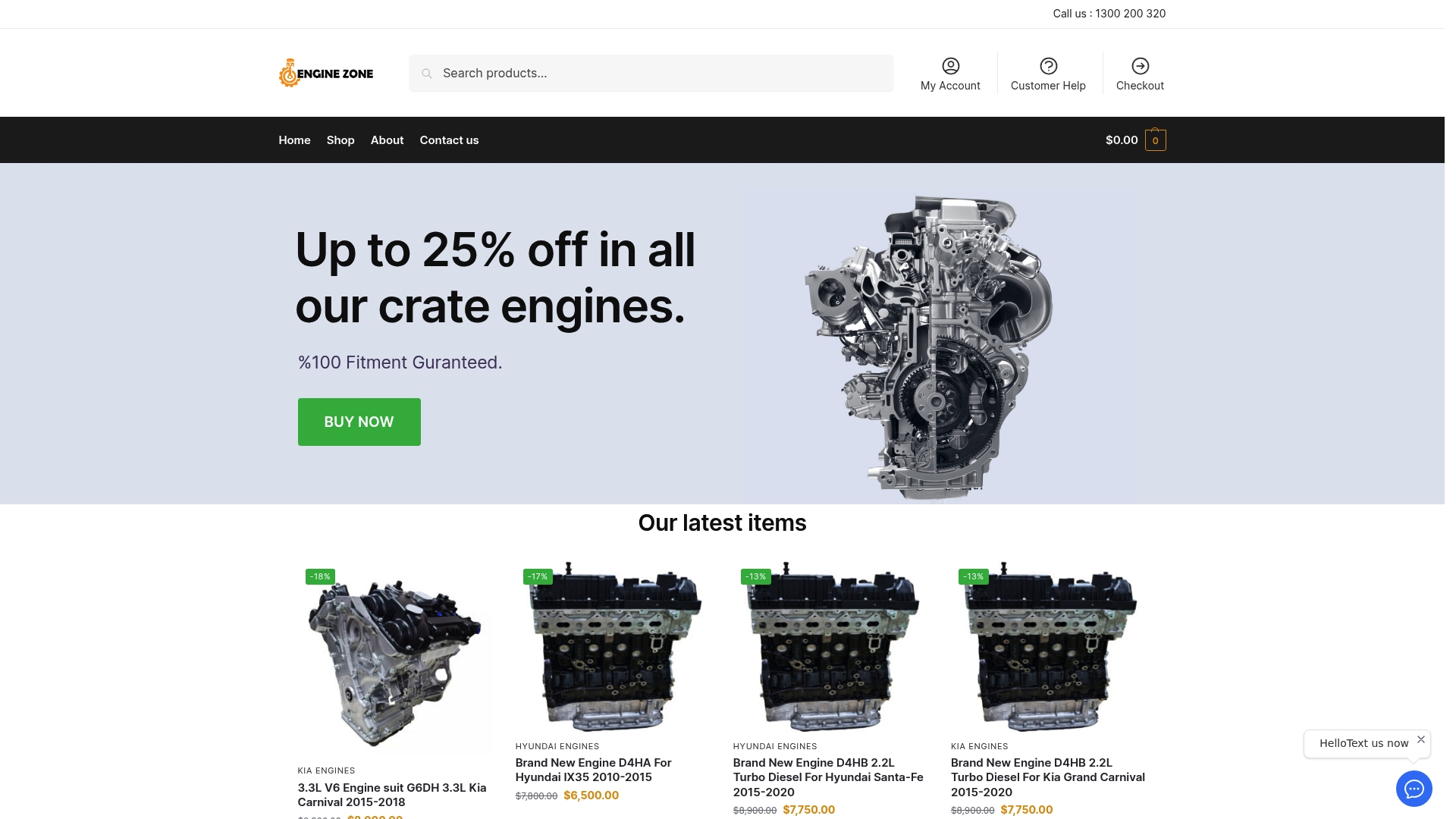
A quote is only as good as the engine behind it. Engine Zone supplies new, tested, and guaranteed crate engines for Hyundai and Kia vehicles across Australia, with transparent pricing and fast delivery built in. Before you finalise your next engine replacement estimate, explore the benefits of new crate engines and see how a known-quality unit with a full warranty changes the risk profile of the entire job. If you are still deciding between engine types, the crate engine selection guide walks you through fitment, warranty, and cost considerations in plain language. Engine Zone also explains why crate engines save labour time, which directly affects how you price the job.
FAQ
What is included in an engine replacement quote?
A complete engine replacement quote includes the engine unit cost, staged labour charges, OEM wear parts listed individually, sublet work, disposal fees, GST, and warranty terms. Omitting any of these categories creates the conditions for a billing dispute.
How much does engine replacement labour cost in australia?
Australian workshops charge $95–$130 per hour for mechanical labour. A 4-cylinder engine swap typically requires 12–16 hours, making the labour component $1,140–$2,080 before GST.
Should wear parts be listed separately on an engine quote?
Yes. Timing sets, water pumps, engine mounts, and fluids must appear as individual line items. Bundling them into the labour charge prevents customers from verifying what they are paying for and creates disputes.
How do i compare engine replacement quotes fairly?
Compare quotes on the same engine type (used, remanufactured, or new crate), the same wear parts list, and equivalent warranty terms. A lower total that uses a used engine with no warranty is not a like-for-like comparison with a quote using a remanufactured unit with 24-month coverage.
What is a fair parts markup for engine replacement jobs?
A 25%–35% markup on parts cost is standard practice in Australian automotive workshops. This covers procurement time, warranty liability on parts supplied, and inventory carrying costs.