
Sourcing performance crate engines in Australia: 2026 guide
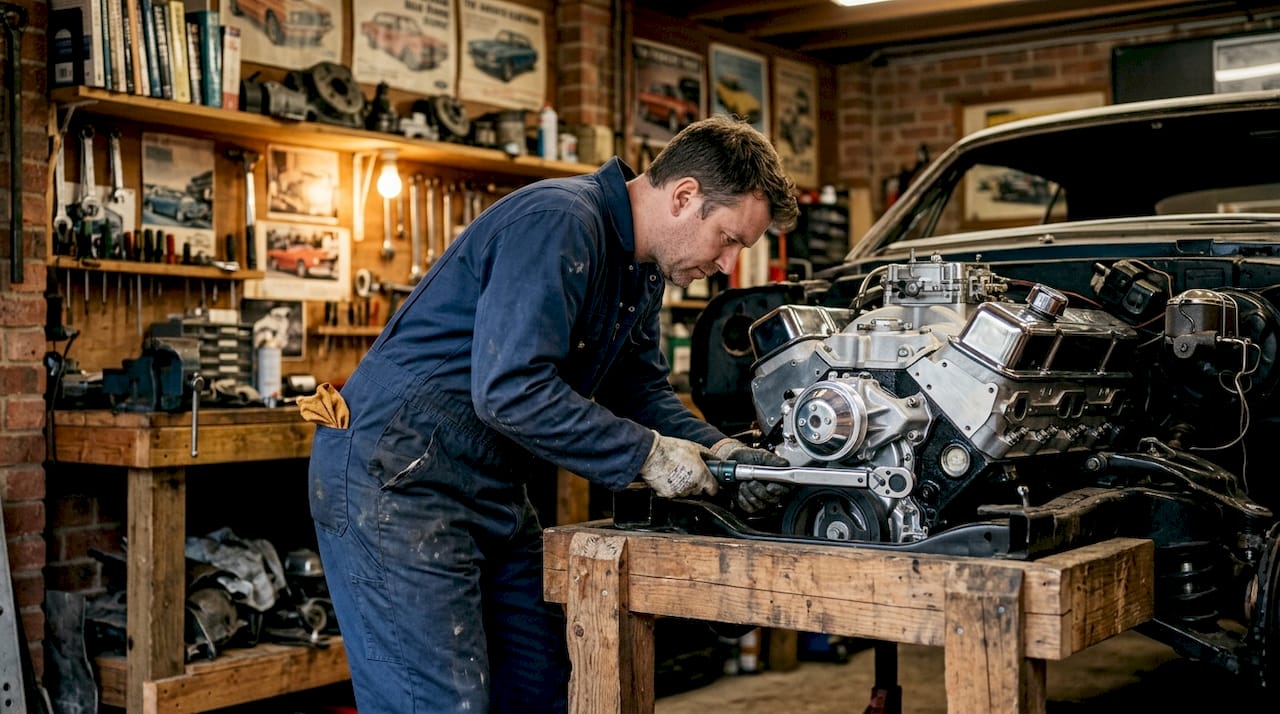
A performance crate engine is a fully assembled, ready-to-install engine unit supplied by a manufacturer or specialist, built to a defined power specification and delivered to your workshop door. Sourcing performance crate engines in Australia means navigating a market where engine platforms like the 6.2-litre LS3 and the Ford 5.0L Coyote Gen 4X dominate serious builds, and where suppliers such as VPW and Herrod Performance have built reputations on local knowledge and motorsport involvement. Get the sourcing process right and you gain a proven power plant with a warranty, technical support, and a clear upgrade path. Get it wrong and you are chasing fitment problems and missing parts for months.
What types of performance crate engines are popular in Australia?
The 6.2-litre LS3 is the benchmark for Australian performance crate builds, rated at 430 horsepower and 424 lb-ft of torque from a cast-aluminium block with a 10.7:1 compression ratio. That combination of power, parts availability, and broad vehicle compatibility makes it the default choice for street builds, track cars, and engine swaps across Holden, Ford, and custom chassis platforms. The LS3 fits a wide range of engine mounts and transmission interfaces, which reduces the engineering cost of a swap significantly.
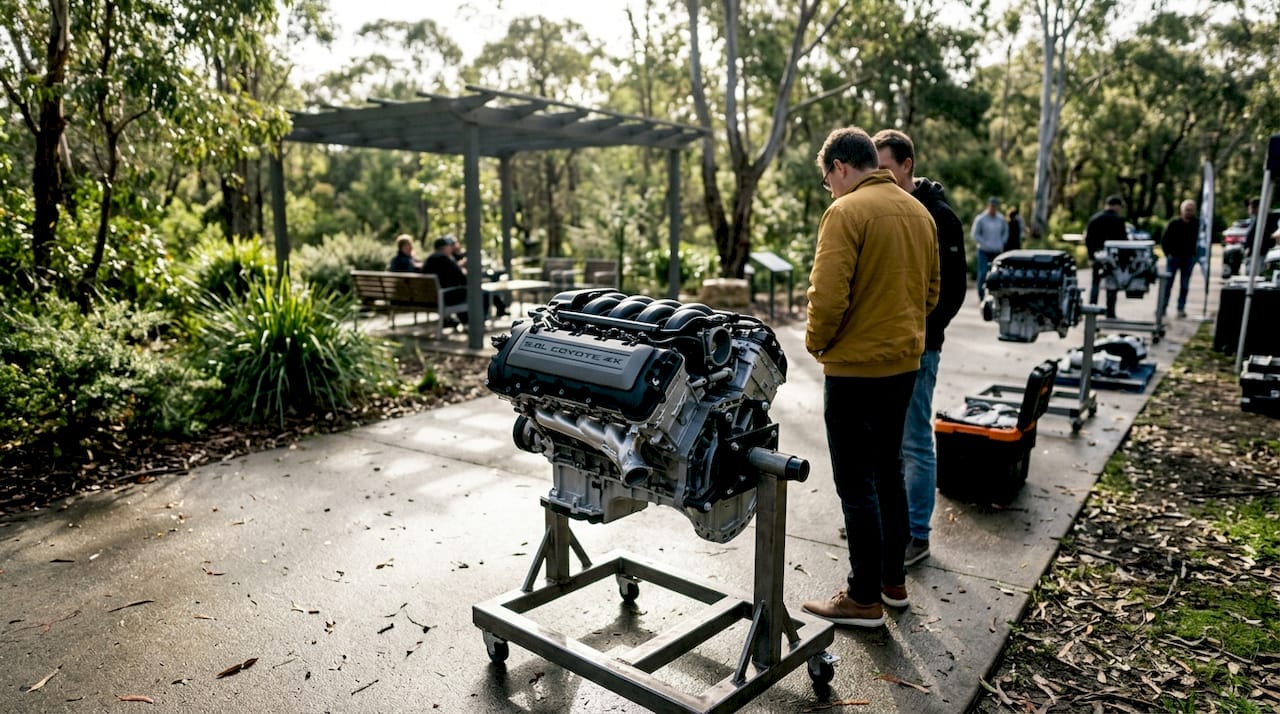
The Ford Performance 5.0L Coyote Gen 4X is the other major contender, producing 460 horsepower and 420 lb-ft of torque. It features both direct and port fuel injection alongside Ti-VCT variable cam timing, which gives it strong power across a wider rev range than older pushrod designs. The Coyote suits classic Ford builds and modern custom projects where a high-revving V8 character is the goal.
| Engine | Power | Torque | Best suited for |
|---|---|---|---|
| 6.2L LS3 V8 | 430 HP | 424 lb-ft | Street, track, swap builds |
| Ford 5.0L Coyote Gen 4X | 460 HP | 420 lb-ft | Classic Ford, custom builds |
Beyond these two platforms, forced induction variants of both engines are available through specialist suppliers. Supercharged LS variants and turbocharged Coyote builds push well past 600 horsepower, though they require additional planning around intercooling, fuel systems, and engine management.
Pro Tip: Match your engine choice to your primary use case before you look at horsepower figures. A 430 HP naturally aspirated LS3 on pump fuel is far more liveable on the street than a 600 HP boosted variant that demands race fuel and frequent tuning.
Where do you find reputable Australian crate engine suppliers?
The best high performance engine suppliers in Australia share a common trait: they are active in the local motorsport community and understand the specific demands of Australian roads, climates, and vehicle platforms. Suppliers involved in the Australian racing scene carry hands-on knowledge of chassis integration challenges that a general parts importer simply does not have.
When evaluating performance engine distributors in Australia, look for these qualities:
- Full inventory depth. The best suppliers stock camshafts, cylinder heads, and wiring alongside the engine itself. Buying a crate engine from a supplier who cannot also supply the control pack or accessory drive is a common and costly mistake.
- Warranty clarity. A reputable supplier states the warranty period, what it covers, and how claims are handled. Vague warranty language is a red flag.
- Nationwide delivery with tracking. Specialist suppliers provide nationwide shipping with after-sales support, which matters enormously if you are in regional Queensland or Western Australia and cannot drive to a Sydney warehouse.
- Technical support after the sale. Phone or email access to a technician who knows the engine you bought is worth more than a small price saving from a supplier who goes quiet after payment.
- Motorsport involvement. Suppliers who supply engines to race teams understand durability requirements that road car builds rarely test. That knowledge transfers directly to the advice they give you.
Pro Tip: Ask any supplier whether they have supplied engines to Australian motorsport teams or track-day competitors. The answer tells you immediately whether their expertise is theoretical or earned.
How do you check engine compatibility before you buy?
Compatibility planning prevents the most expensive mistakes in any crate engine build. Work through these steps before you commit to a purchase.
- Confirm engine mount compatibility. The LS3 and Coyote both use common mount patterns, but your chassis may need adaptor plates or custom mounts depending on the donor vehicle. Measure your bay and confirm with the supplier before ordering.
- Check your transmission interface. A new engine paired with an existing gearbox requires a matching bellhousing pattern and a compatible torque converter or clutch assembly. Mismatched combinations are a leading cause of post-install problems.
- Plan your engine management system. Modern crate engines like the Coyote Gen 4X use complex ECU control packs. Confirm whether the engine comes with a standalone harness and tune, or whether you need to source those separately.
- Account for forced induction requirements early. Adding a supercharger or turbo to a crate engine involves belt drive design, air ducting, and heat exchanger placement. These are not bolt-on decisions. Engage a supplier with integration engineering experience before you buy the engine.
- Verify fuel system capacity. High-output engines demand higher-flow fuel pumps, larger injectors, and sometimes a return-line fuel system. Budget for these components alongside the engine cost.
The engine replacement process is far smoother when compatibility is confirmed at the research stage rather than discovered on the workshop floor. A detailed guide on how to choose a crate engine can also help you narrow your options before contacting suppliers.
Step-by-step guide to buying performance crate engines in Australia
A structured approach to crate engine sourcing saves time and reduces the risk of buying the wrong unit.
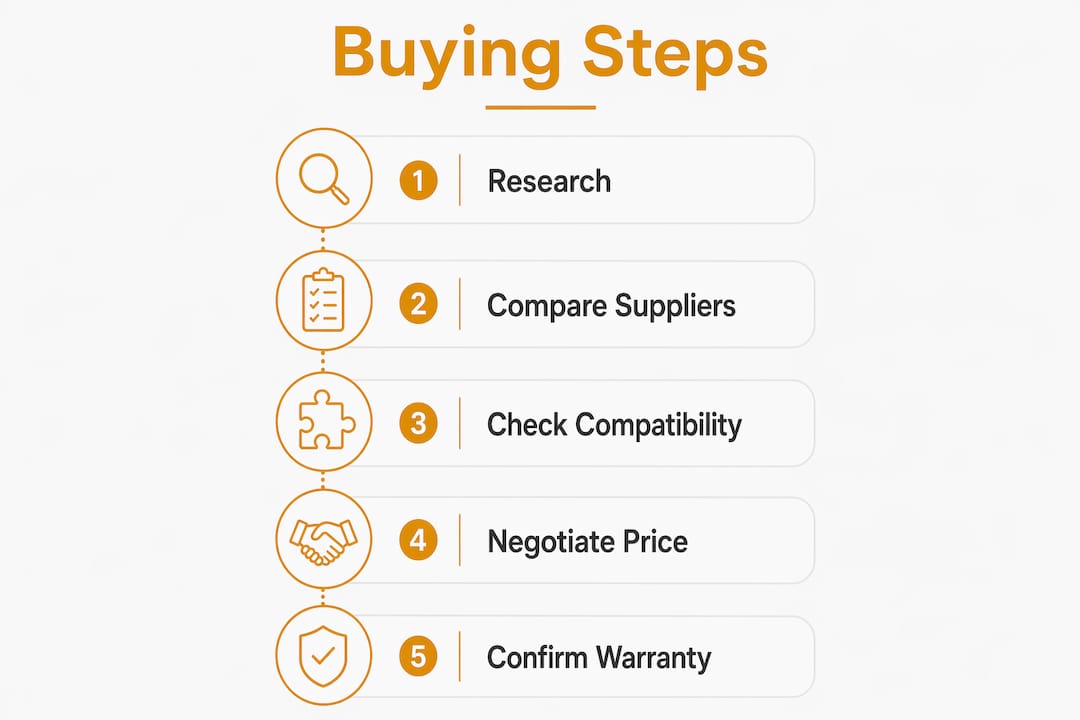
- Define your build intent. Street, strip, circuit, or off-road use each demand different engine characteristics. Write down your power target, fuel type, and budget before you research models.
- Research engine specifications. Compare horsepower, torque, compression ratio, and fuel system type across the platforms that suit your chassis. Use supplier websites and motorsport forums to cross-reference real-world results.
- Contact at least two suppliers. Get quotes, ask about lead times, and test their technical knowledge with specific questions about your application. A supplier who answers confidently and accurately is worth paying a small premium for.
- Confirm warranty and service terms in writing. Ask specifically what the warranty covers, how long it runs, and what voids it. Get the answer in writing before you pay.
- Confirm delivery timelines and logistics. Crate engines are heavy freight. Confirm whether the supplier uses a tracked freight service and whether they provide lift-gate delivery if you do not have a forklift.
- Place your order and plan your installation. Book your mechanic or workshop time before the engine arrives. Delays between delivery and installation can create storage and insurance complications.
| Sourcing strategy | Best for | Key consideration |
|---|---|---|
| Direct from specialist supplier | Most builds | Best technical support and warranty |
| Motorsport trade supplier | Race and track builds | Highest durability focus |
| Online engine retailer | Budget-conscious buyers | Verify warranty and support carefully |
Understanding crate engine pricing in Australia before you contact suppliers puts you in a stronger negotiating position and helps you spot quotes that are either suspiciously cheap or unjustifiably expensive.
Common mistakes when sourcing crate engines locally
Most sourcing problems are predictable and avoidable. The following pitfalls appear repeatedly across Australian builds.
- Buying on price alone. A cheap engine with no warranty and no technical support will cost more in the long run than a correctly priced unit from a reputable supplier.
- Ignoring component compatibility. As the principle goes, bad combinations kill engines, not horsepower. Pairing a high-output engine with an unsuitable short block or a mismatched drivetrain is the fastest way to destroy an expensive investment.
- Overlooking supporting parts. An engine without the correct control pack, accessory drive, or exhaust manifolds is not ready to install. Confirm exactly what is included in the crate before you pay.
- Skipping post-purchase support planning. Know who you will call if the engine has a problem after installation. A supplier with no after-sales contact process leaves you without recourse when you need it most.
- Underestimating installation complexity. Forced induction builds in particular benefit from engineering integration support from the supplier, not just a parts list. Engage an experienced mechanic early, especially for custom builds.
Pro Tip: Before finalising any purchase, ask the supplier for a complete list of what is and is not included in the crate. Compare that list against your installation checklist. The gaps you find are your additional parts budget.
Key takeaways
Sourcing performance crate engines in Australia requires matching the right engine platform to your build intent, choosing a supplier with genuine local expertise, and confirming compatibility before you spend a dollar.
| Point | Details |
|---|---|
| Engine platform choice | The LS3 and Ford Coyote Gen 4X are the dominant platforms for Australian performance builds. |
| Supplier expertise matters | Choose suppliers active in Australian motorsport for reliable technical advice and local knowledge. |
| Compatibility first | Confirm engine mounts, transmission interface, and ECU requirements before purchasing. |
| Full inventory counts | The best suppliers stock supporting components and offer after-sales technical support. |
| Structured sourcing process | Define your build intent, compare at least two suppliers, and confirm warranty terms in writing. |
What I have learned from building with Australian crate engines
The biggest mistake I see enthusiasts make is treating a crate engine purchase like buying a set of tyres. They focus entirely on the headline horsepower number and ignore everything that sits around the engine. The LS3’s 430 horsepower rating is genuinely impressive, but that number means nothing if the engine is sitting on incompatible mounts with a mismatched gearbox and no tune.
The suppliers who have impressed me most are the ones who push back when your spec sheet does not add up. A good supplier will tell you that your planned combination will not work before you buy, not after. That kind of honesty is rare and worth paying for. Suppliers involved in the Supercars Championship and similar endurance categories understand that engines face extreme durability demands under sustained load. That experience shapes how they advise customers on street and track builds alike.
The trend I am watching in 2026 is the growing demand for forced induction crate packages where the supplier provides the engine, the boost system, and the tune as a single validated package. That approach removes the guesswork from boosted builds and shifts the integration risk back to the supplier, where it belongs. If you are planning a build that goes beyond a naturally aspirated swap, look specifically for suppliers who offer that kind of end-to-end package. It costs more upfront and saves considerably more in rework.
— Jason
Engine Zone: your crate engine sourcing partner in Australia
Engine Zone stocks a curated range of crate engines with transparent pricing, fitment guarantees, and nationwide delivery across Australia. Every engine listing includes detailed specifications, compatibility information, and warranty terms so you know exactly what you are buying before checkout.
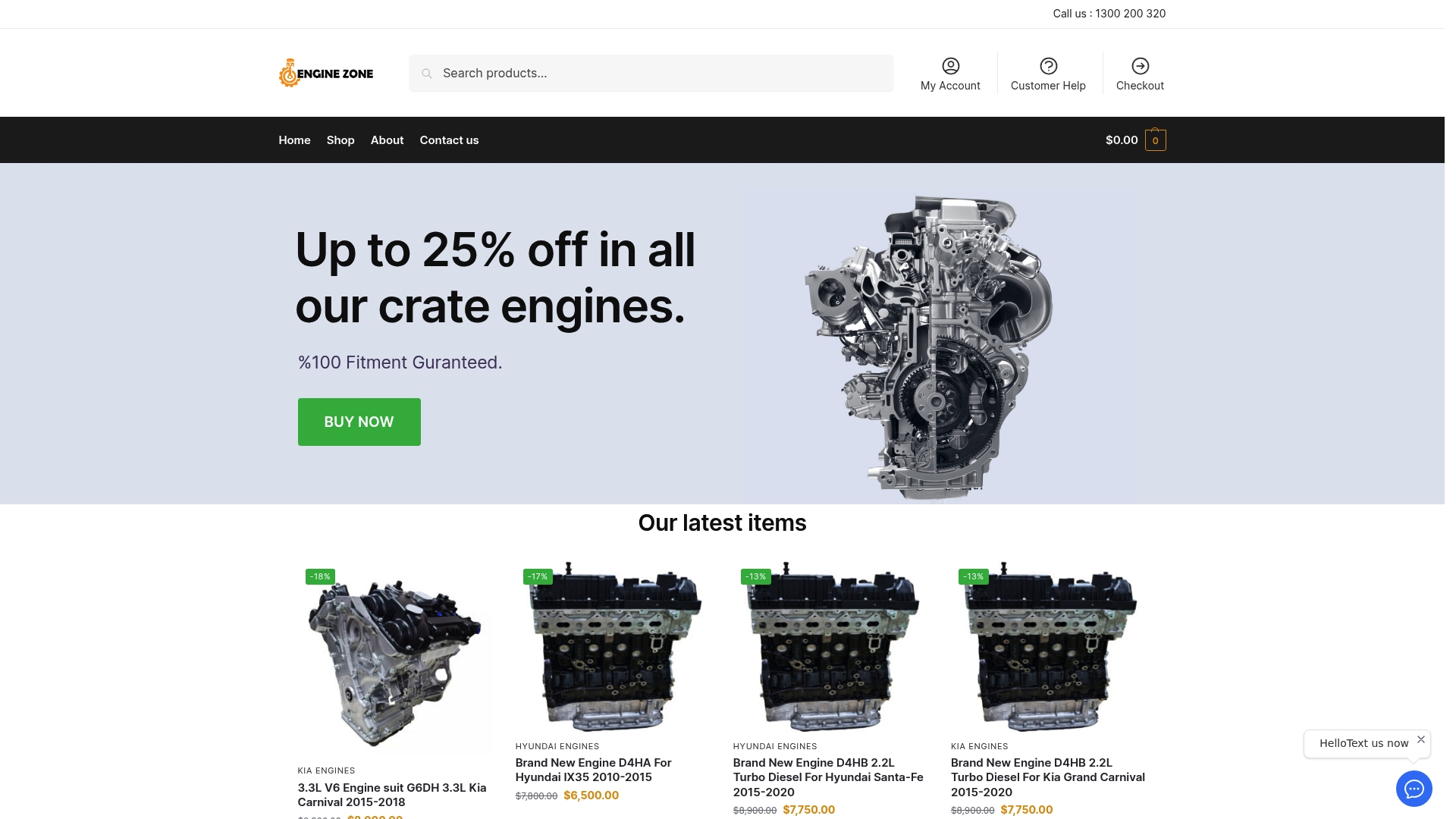
Whether you are planning a street build, a track car, or a full restoration, the benefits of a new crate engine include a clean warranty, known service history, and a power output you can plan around from day one. Engine Zone’s team provides fitment advice and post-purchase support, so you are not left solving compatibility problems alone. Use the crate engine installation checklist to prepare your workshop before the engine arrives and reduce installation time significantly.
FAQ
What is a performance crate engine?
A performance crate engine is a fully assembled engine built to a specific power output and shipped ready to install. It differs from a rebuilt engine in that it is new or remanufactured to factory or above-factory specifications.
Which crate engine is best for Australian builds?
The 6.2-litre LS3 is the most popular choice for Australian performance builds, offering 430 horsepower, broad parts availability, and wide vehicle compatibility. The Ford 5.0L Coyote Gen 4X is the preferred option for Ford-based and high-revving custom builds at 460 horsepower.
How do I verify a crate engine supplier is reputable?
Ask the supplier for warranty terms in writing, confirm they stock supporting components, and check whether they have supplied engines to Australian motorsport teams or track-day competitors. Reputable suppliers answer technical questions confidently and provide trackable nationwide delivery.
Do crate engines come ready to install?
Most crate engines require additional components such as an exhaust manifold, accessory drive, and engine management system. Confirm exactly what is included in the crate before purchasing and compare that list against your installation requirements.
How much does a performance crate engine cost in Australia?
Pricing varies significantly by platform, specification, and supplier. The cost of a crate engine in Australia depends on whether the unit is naturally aspirated or boosted, what supporting components are included, and the supplier’s warranty and support terms.