
Engine replacement turnaround time: what to expect

Engine replacement turnaround time is the total elapsed time from when your vehicle enters a workshop until it is ready to drive again, and it is determined by labour hours, parts availability, and service provider efficiency. For mainstream vehicles, understanding how engine replacement turnaround time works means knowing that a standard swap takes 2–5 calendar days at a professional workshop, while complex jobs on luxury or modified vehicles can stretch to three weeks. Fleet managers and private owners who grasp these variables can set realistic expectations, choose the right service provider, and avoid costly downtime surprises.
What are the main factors affecting engine replacement turnaround time?
Engine swap duration is shaped by four core variables: labour hours, parts sourcing, vehicle complexity, and service provider type. Each one compounds the others, so a delay in one area almost always pushes out the final delivery date.
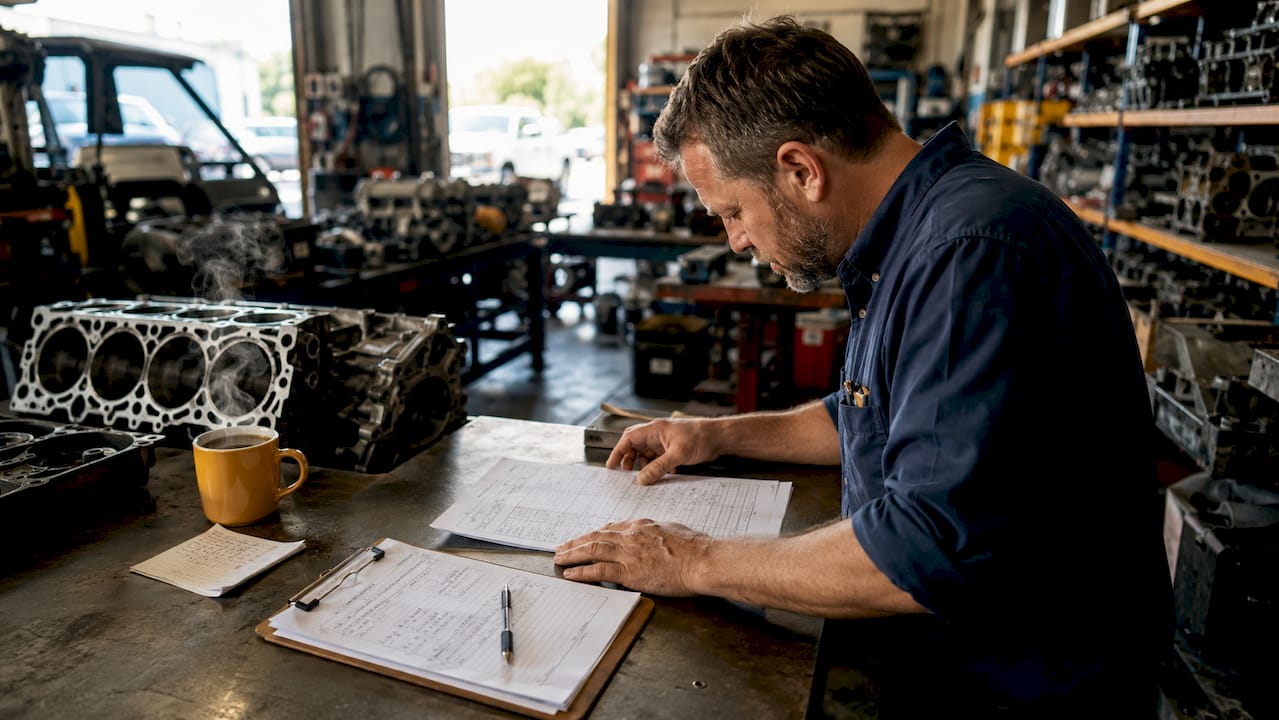
Labour hours vary significantly by job type. A standard engine swap on a mainstream Hyundai i30 or Kia Cerato requires 8–12 labour hours, which translates to roughly two to three calendar days when you factor in workshop scheduling. Complex conversions or high-performance builds can demand 20–40 hours or more, pushing the job into the second week.
Parts availability is often the biggest wildcard. A workshop with the right crate engine on the shelf can begin the swap the same day. A job waiting on a special-order component from overseas can sit idle for five to ten business days before a spanner is lifted.
- Vehicle complexity: Modern engines require evacuating A/C systems, disconnecting CAN bus wiring, and recalibrating sensors, all of which add hours beyond the basic swap estimate.
- Service provider type: Dealerships and independent mechanics operate under different scheduling models, which directly affects how quickly your job moves through the queue.
- Warranty and fleet contracts: Vehicles under active warranty or fleet agreements are often prioritised differently, which can either speed up or slow down your specific job depending on the provider’s commitments.
Pro Tip: Before booking your vehicle in, ask the workshop directly whether the replacement engine is already in stock. If they need to source it, get a confirmed delivery date in writing before you commit to the job.
For Hyundai and Kia owners specifically, the variables impacting replacement timelines can differ from other brands due to parts availability patterns in the Australian market.
How does turnaround time differ between dealerships and independent repair shops?
The dealership engine swap turnaround time and the independent shop timeline are not the same, and the gap is wider than most vehicle owners expect.
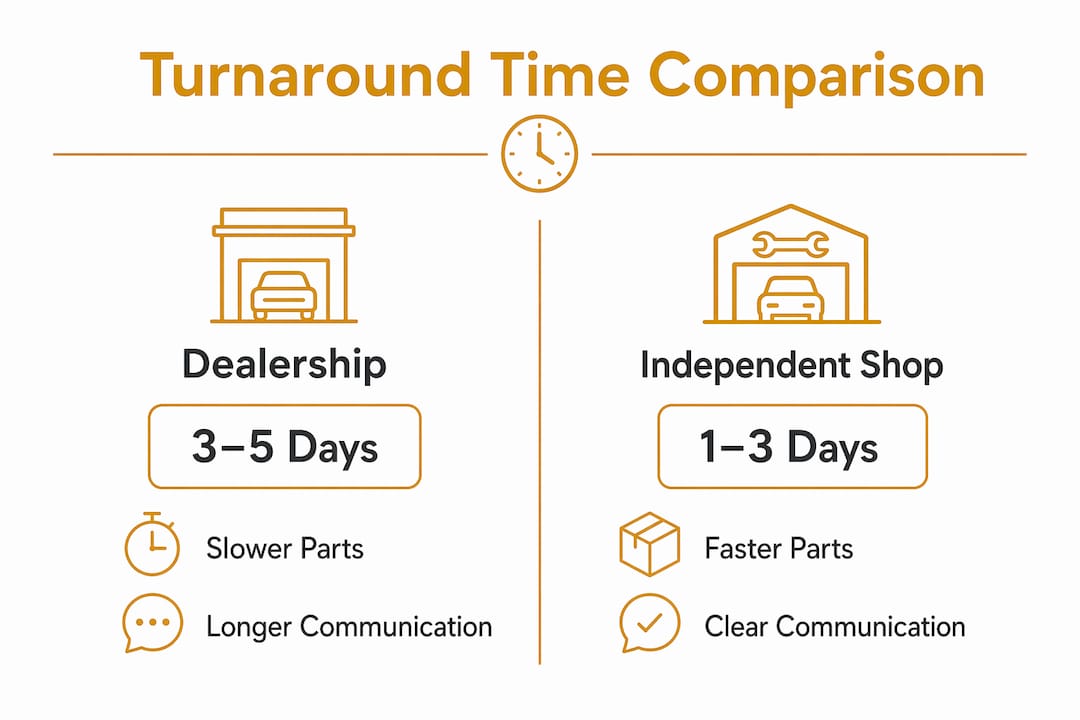
Independent mechanics typically complete engine replacements in 1–2 days faster than dealerships. The reason is structural. Dealerships operate as profit centres anchored to new car sales, meaning warranty jobs and fleet contracts take scheduling priority over retail customers. Corporate procurement processes also slow parts ordering, since dealerships often source through manufacturer channels rather than local suppliers.
Independent shops bill actual hours worked rather than flat-rate estimates. This flexibility means a mechanic who hits an unexpected complication, such as seized bolts or a corroded wiring harness, can keep working through it without the job being artificially capped at a warranty-rate hour count.
The JD Power 2026 study puts hard numbers to this difference. 49% of aftermarket full-service customers complete their service within an hour, compared to fewer than 17% at dealerships. That is a three-to-one speed advantage for aftermarket providers on routine jobs. For a full engine replacement, the proportional gap holds.
“Dealers communicate timelines upfront only 80% of the time, and advisors fully focused on customer needs yield satisfaction scores above 860, while poor communication drops scores below 570.” — JD Power 2026 Study
Communication is where dealerships lose the most ground. Clear upfront communication about expected repair timelines correlates directly with higher customer satisfaction scores. When a workshop tells you the job will take four days and it takes four days, trust is built. When a dealership says two days and calls on day five, the relationship suffers regardless of the technical quality.
| Factor | Dealership | Independent Mechanic |
|---|---|---|
| Average turnaround | 3–5 days | 1–3 days |
| Parts sourcing | Manufacturer channels, slower | Local suppliers, faster |
| Labour billing | Flat-rate, warranty-capped | Actual hours worked |
| Scheduling priority | Warranty and fleet first | Merit-based, retail friendly |
| Timeline communication | Upfront 80% of the time | Generally more direct |
Dealerships do retain one genuine advantage: perceived technical expertise and manufacturer-specific diagnostic tools. For complex electronic faults on newer Hyundai or Kia models, that expertise can matter. The trade-off between trust and speed is real, and the right choice depends on your specific situation.
What steps can you take to speed up engine replacement?
Managing the engine installation timeline is not passive. Vehicle owners and fleet managers who take specific steps before and during the process consistently see shorter turnaround times.
- Confirm parts availability before booking. Ask whether the workshop has the replacement engine in stock or can source it within 24 hours. A crate engine sitting on a shelf eliminates the single biggest delay in most jobs.
- Bring complete service records. A workshop that can see your vehicle’s full history spends less time on diagnostics. Knowing the exact engine code, previous repairs, and any known electrical issues removes guesswork from the job.
- Consider a crate engine over a rebuild. Crate engines reduce downtime by eliminating extended parts sourcing and enabling faster installation. For fleet operators who need vehicles back on the road quickly, this is the most reliable way to cut the engine swap duration.
- Use AI tools and manufacturer support lines. Ford’s 2026 programme using AI-enhanced manuals and technician hotlines cut repair times by 10–15%, saving roughly half a day per job. Fleet managers can request that their preferred workshop use similar resources.
- Choose workshops with a proven track record. Ask for references or check reviews specifically mentioning turnaround time. A workshop that consistently delivers on its quoted timeline is worth more than one that quotes low and delivers late.
Pro Tip: Fleet managers should negotiate a service level agreement with their preferred workshop that specifies maximum turnaround times for engine replacements. This creates accountability and gives you a clear basis for switching providers if timelines slip.
Understanding the full engine replacement process from drop-off to pick-up helps you identify exactly where delays are occurring and which steps you can influence.
How do turnaround times vary by engine type and replacement method?
The type of engine you choose is one of the most controllable factors in the entire engine replacement process. Each option carries a different time and cost profile.
Engine rebuilds are the slowest option. A full rebuild requires disassembling the existing engine, machining worn components, sourcing individual parts, and reassembling to specification. Rebuilds typically take 1–2 weeks and cost between $2,500 and $4,000. The upside is that a well-executed rebuild can extend engine life significantly, which matters for classic or specialised vehicles where a direct replacement engine is not available.
Used engines sit in the middle of the range. Sourcing a low-kilometre used engine from a wrecker can take anywhere from one day to two weeks depending on availability. The labour time is similar to a new engine swap, but the risk of hidden faults means some workshops add diagnostic time after installation.
Remanufactured and crate engines offer the fastest and most predictable turnaround. These engines arrive tested, guaranteed, and ready to install. The decision between rebuild and replacement should weigh timeline impact against long-term reliability and budget.
| Replacement Method | Typical Turnaround | Approximate Cost | Best Suited For |
|---|---|---|---|
| Engine rebuild | 1–2 weeks | $2,500–$4,000 | Classic or rare vehicles |
| Used engine | 3–7 days | $800–$2,500 | Budget-conscious repairs |
| Remanufactured engine | 2–4 days | $2,000–$4,500 | Reliability with speed |
| New crate engine | 2–3 days | $3,000–$6,000+ | Fleet and performance builds |
- Crate engines eliminate the sourcing wait that plagues used engine jobs.
- Remanufactured engines carry warranties that reduce post-installation diagnostic time.
- Classic or performance vehicles often have no direct crate option, making rebuilds unavoidable.
- For Hyundai and Kia owners, the crate versus rebuilt engine comparison is particularly relevant given parts availability patterns in Australia.
The cost versus time trade-off is straightforward for fleet managers: every extra day a vehicle is off the road has a measurable cost. Paying more for a crate engine that returns the vehicle two days sooner is often the correct financial decision when you run the numbers.
Key takeaways
Engine replacement turnaround time is controlled by labour hours, parts sourcing speed, service provider type, and engine replacement method, and managing these four variables is the most direct way to reduce downtime.
| Point | Details |
|---|---|
| Standard turnaround baseline | Most mainstream vehicles complete engine swaps in 2–5 calendar days at a professional workshop. |
| Independent shops are faster | Independents typically beat dealerships by 1–2 days due to flexible labour billing and local parts access. |
| Crate engines cut wait time | Choosing a crate engine eliminates parts sourcing delays and reduces total installation time. |
| Communication drives satisfaction | Workshops that communicate timelines upfront consistently deliver higher satisfaction and fewer delays. |
| Fleet managers should negotiate SLAs | A written service level agreement with maximum turnaround times creates accountability and protects operational uptime. |
The uncomfortable truth about turnaround promises
I have spoken with enough fleet managers and workshop owners to know that quoted turnaround times are often optimistic. Not dishonest, but optimistic. A workshop quoting two days is usually quoting the labour time, not the total calendar time including parts delivery, scheduling gaps, and the inevitable complication that shows up once the old engine is out.
The single biggest mistake I see vehicle owners make is accepting a verbal timeline without asking one follow-up question: “Is the replacement engine already here?” If the answer is no, add at least three to five business days to whatever number they gave you. Parts delays are the most common reason a two-day job becomes a ten-day job, and they are entirely predictable if you ask the right question upfront.
The trend I am watching in the Australian workshop market is the growing gap between shops that have invested in parts relationships and digital diagnostic tools and those that have not. The former group is getting faster. The latter is getting slower as vehicle complexity increases. For fleet operators managing ten or more vehicles, choosing the right workshop partner is now a genuine competitive advantage, not just a maintenance decision.
My honest recommendation: if your vehicle is a Hyundai or Kia and you need an engine replacement, source the engine yourself from a specialist before you book the job. Arrive at the workshop with the engine ready to go. You will cut the turnaround by days and remove the biggest variable from the equation entirely.
— Jason
How engine zone helps you get back on the road faster
Waiting on parts is the number one reason engine replacements drag past their quoted timeline. Engine Zone stocks a broad range of crate and tested engines for Hyundai and Kia vehicles, with fast delivery across Australia, so your workshop can start the job the day the engine arrives rather than the day it finally clears customs.
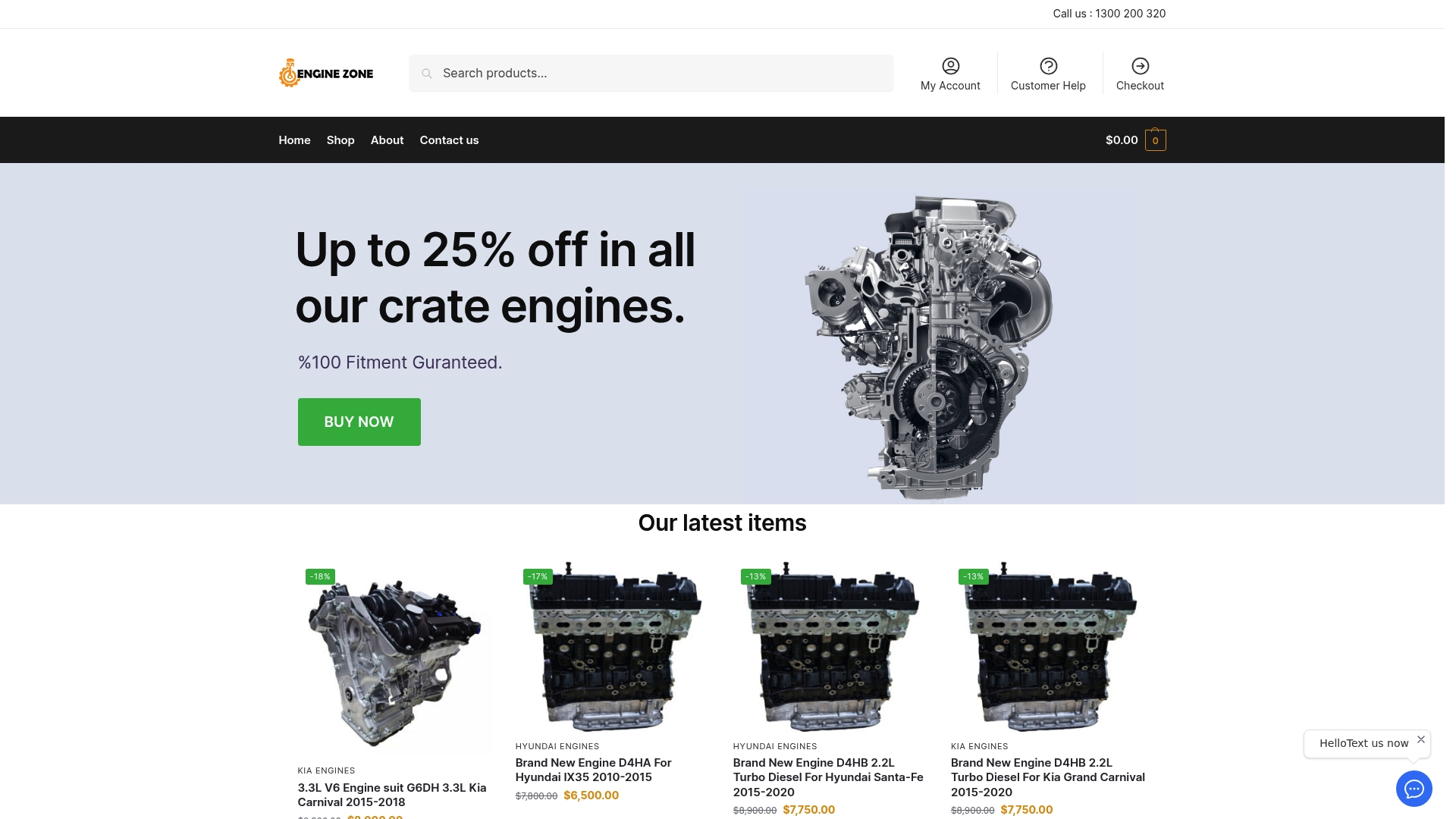
Choosing a new crate engine from Engine Zone means your mechanic receives a tested, guaranteed unit that is ready to install without additional diagnostic work. Every engine comes with fitment support, so there are no compatibility surprises on the day. Fleet managers can contact Engine Zone directly for volume pricing and turnaround estimates tailored to their vehicle mix. Browse the full range at Engine Zone’s shop or reach out to the team for a fitment check before you commit.
FAQ
How long does an engine replacement typically take?
A standard engine replacement takes 2–5 calendar days for mainstream vehicles at a professional workshop. Complex jobs on luxury or modified vehicles can take 1–3 weeks depending on parts availability and labour hours required.
Is a dealership or independent mechanic faster for an engine swap?
Independent mechanics are generally faster, completing jobs in 1–2 fewer days than dealerships. Aftermarket providers complete service within an hour at nearly three times the rate of dealerships, and the same speed advantage applies to larger jobs like engine replacements.
Does the type of replacement engine affect turnaround time?
Yes, significantly. A crate or remanufactured engine can be installed in 2–4 days, while an engine rebuild takes 1–2 weeks due to machining and individual parts sourcing. Choosing a ready-to-install engine is the fastest path to getting your vehicle back on the road.
What is the most common cause of engine replacement delays?
Parts availability is the most frequent cause of delays. A workshop waiting on a special-order engine or component can add five to ten business days before labour even begins. Confirming that the replacement engine is in stock before booking eliminates this risk.
Can technology help reduce engine replacement turnaround time?
Yes. Ford’s 2026 initiative using AI tools and technician hotlines reduced repair times by 10–15%, saving roughly half a day per job. Fleet managers can request that their workshop use manufacturer support lines and digital diagnostic resources to keep complex jobs on schedule.