
Engine replacement cost breakdown Australia: 2026 guide

Engine replacement cost in Australia is the total expense of supplying and fitting a new, reconditioned, or used engine into a vehicle, covering parts, labour, and ancillary components. The full engine replacement cost breakdown in Australia typically ranges from $3,096 to $11,097, depending on engine type, vehicle make, and the replacement option chosen. For fleet operators managing multiple vehicles or private owners facing an unexpected failure, understanding exactly where that money goes is the difference between a smart repair decision and a costly mistake. This guide breaks down every cost component so you can budget with confidence.
What factors drive engine replacement costs in Australia?
The engine replacement cost breakdown in Australia is not a single fixed number. Several variables stack on top of each other to produce the final invoice, and knowing them upfront prevents surprises.
Engine type and size sit at the top of the list. A standard 4-cylinder petrol engine in a Hyundai i30 or Kia Cerato costs significantly less to source and fit than a V8 diesel in a Toyota LandCruiser or a turbocharged unit in a performance vehicle. Petrol engines typically cost $3,500 to $6,500 all-in, while diesel engines run $5,000 to $12,500 due to greater complexity and higher parts prices. That gap reflects both the engine price itself and the additional labour time required.
Replacement engine condition is the second major variable. Three categories exist in the Australian market:
- Used engines sourced from wreckers or importers, typically priced at $1,200 to $3,500 for the unit alone
- Remanufactured or reconditioned engines, which are professionally rebuilt to specification, priced at $2,500 to $5,000 for the unit
- New crate engines, which are factory-fresh and carry the highest reliability, priced from $4,000 to $7,500 or more
Workshop location and type also shift the total considerably. Metro workshops in Sydney, Melbourne, and Brisbane charge up to $200 per hour for labour, while regional independents often charge less. Dealership service centres typically sit at the top of the rate scale. For a job requiring 12 hours of labour, a $50 per hour difference translates to $600 in savings.
Vehicle complexity adds another layer. Modern vehicles with tight engine bays, integrated electronics, and turbocharged systems require more disassembly time and specialist knowledge. A straightforward swap on an older naturally aspirated engine takes fewer hours than pulling a modern direct-injection unit with multiple ancillary connections.
Parts availability and shipping affect both cost and timeline. Engines for common Hyundai and Kia models are generally well-stocked in Australia, but less common imports or older models may require sourcing from interstate or overseas, adding freight costs and lead time.
Pro Tip: Before accepting any quote, ask the workshop to itemise parts, labour hours, and ancillary components separately. A single-line quote makes it impossible to identify where costs can be reduced.
How much does engine replacement cost? Parts and labour breakdown
Understanding the cost of engine replacement in Australia means separating the invoice into its three core components: the engine unit itself, labour, and additional parts.
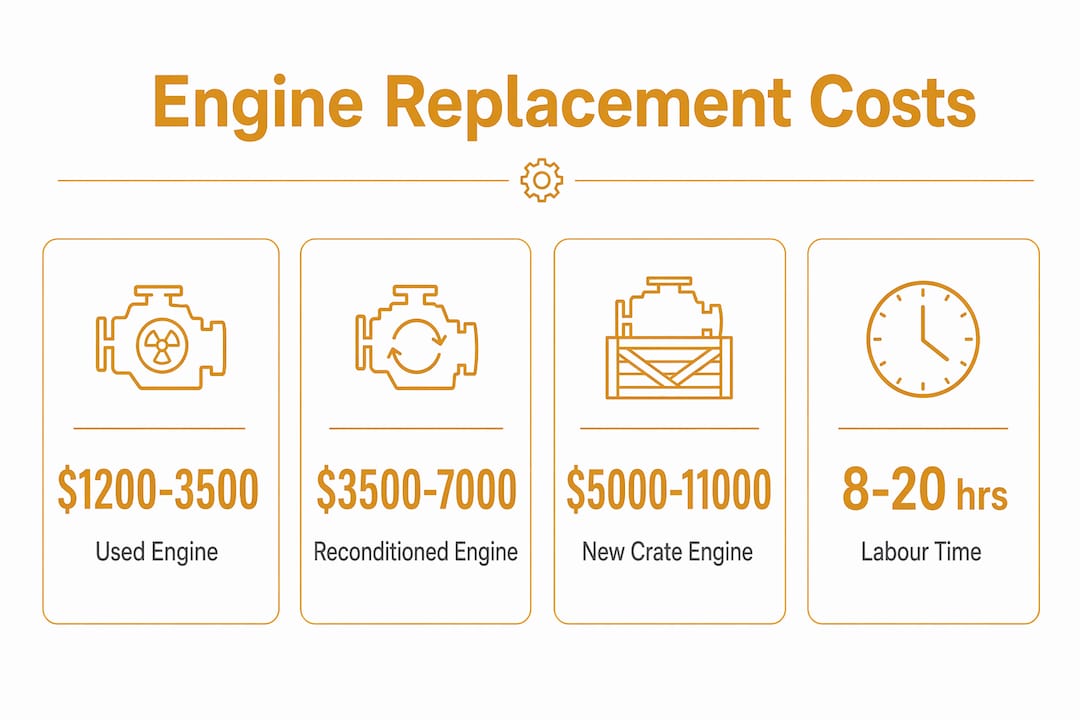
Engine unit costs by type
| Engine type | Unit cost (AUD) | Typical total with labour |
|---|---|---|
| Used petrol (4-cylinder) | $1,200 to $3,500 | $2,500 to $5,000 |
| Reconditioned petrol | $2,500 to $5,000 | $4,000 to $7,500 |
| New crate engine (petrol) | $4,000 to $7,500+ | $6,000 to $11,000+ |
| Diesel (any condition) | $3,000 to $8,000 | $5,000 to $12,500 |
Used and reconditioned engines are the most common choice in Australia because they reduce upfront cost significantly compared to new units. The trade-off is warranty coverage and remaining service life, which is why reconditioned engines from reputable suppliers often represent the best value for vehicles with moderate remaining life.
Labour costs
Labour typically runs 8 to 20 or more hours for a full engine replacement, depending on vehicle type and engine configuration. At metro rates of up to $200 per hour, that produces a labour bill of $1,500 to $3,500 at independent workshops, and higher at dealerships. For fleet operators, negotiating a fixed labour rate per engine swap across multiple vehicles can reduce this cost meaningfully.
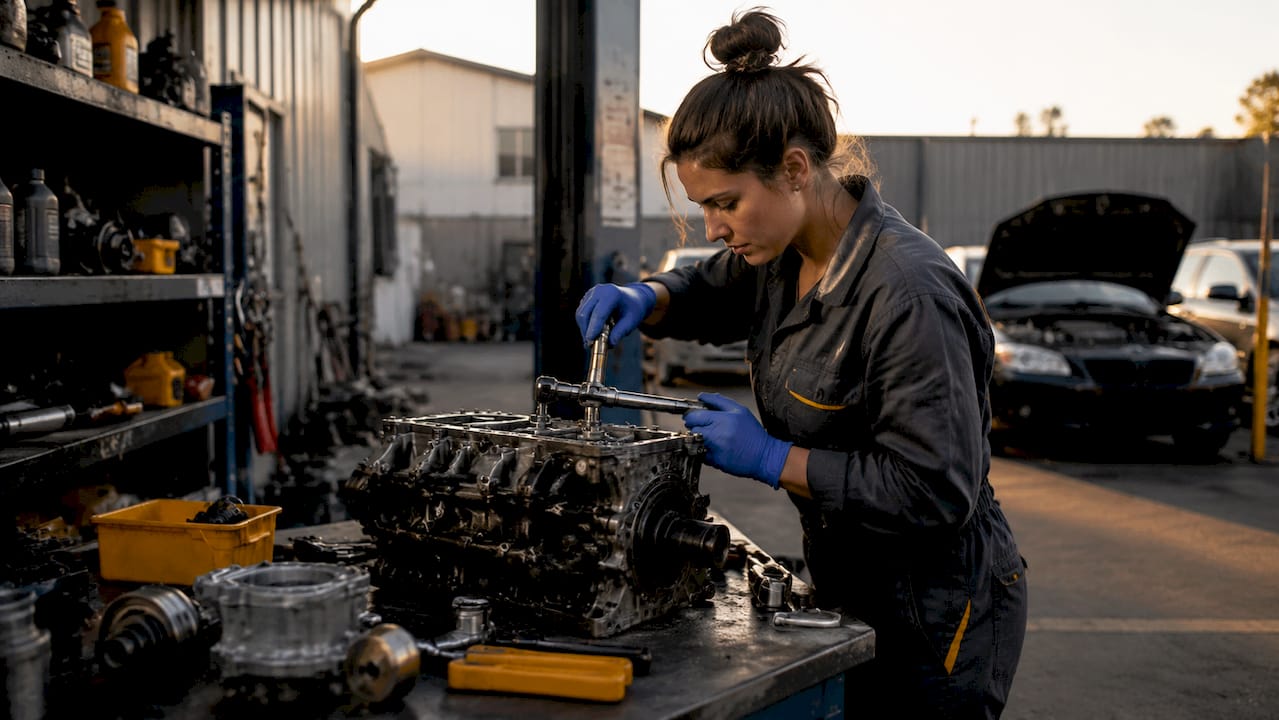
For brand-specific pricing, the Kia engine replacement cost guide and the Hyundai engine cost breakdown on Engine Zone provide model-level detail that generic estimates cannot match.
Additional costs to budget for
Beyond the engine and labour, several ancillary expenses appear on most invoices:
- Engine mounts, gaskets, and seals: $150 to $500
- Coolant, oil, and other fluids: $100 to $250
- Timing belt or chain replacement (if due): $300 to $600
- Sensors and electrical connectors (if damaged): $100 to $400
- Freight for engine delivery: $100 to $400 depending on origin
Pro Tip: Ask your mechanic to inspect the timing belt, water pump, and thermostat while the engine is out. Replacing these at the same time costs a fraction of what it would in a separate job.
How long does an engine replacement take?
The engine replacement process in Australian workshops typically takes 2 to 7 days from drop-off to collection. That window accounts for removal, fitting, and post-installation testing. Understanding the sequence helps you plan around vehicle downtime.
A standard replacement follows these steps:
- Initial diagnostic and quote — The workshop confirms the engine is beyond repair and provides an itemised quote covering parts and labour.
- Engine sourcing — The replacement unit is ordered from a supplier or wrecker. This step drives most delays if the engine is not in stock locally.
- Engine removal — The old engine is drained, disconnected from all ancillary systems, and lifted out. This typically takes 4 to 8 hours depending on vehicle complexity.
- Preparation and transfer — Ancillary components such as the alternator, power steering pump, and exhaust manifold are transferred from the old engine to the new unit where applicable.
- Installation and reconnection — The replacement engine is fitted, all connections are made, and fluids are filled.
- Testing and quality check — The vehicle is started, checked for leaks, and test driven before handover.
Vehicle type and engine availability are the two factors most likely to extend this timeline. A common Hyundai Tucson engine swap with a stocked unit can be completed in 2 to 3 days. A diesel 4WD requiring an imported engine may take a week or more. Clear communication with your mechanic about parts lead times and scheduling reduces unexpected downtime significantly.
For fleet operators, staggering bookings and pre-ordering engines before the vehicle arrives at the workshop cuts average turnaround time by a full day in most cases.
Common mistakes that inflate engine replacement expenses
Several avoidable errors push the final cost of engine replacement in Australia well above what it should be.
Accepting a replacement quote without a thorough diagnostic is the most expensive mistake. Many owners are recommended full engine replacements when only a single component is faulty. A cracked head gasket, failed oil pump, or seized hydraulic lifter can mimic catastrophic engine failure. A second opinion from a specialist before committing to a full swap can save thousands.
Choosing the wrong engine condition for the vehicle’s age also inflates costs over time. Fitting a $1,500 used engine with unknown history into a vehicle you plan to keep for five more years often costs more in the long run than a reconditioned unit with a warranty. Match the engine investment to the vehicle’s remaining value and your ownership plans. The right replacement engine guide from Engine Zone covers this decision in practical detail.
Assuming insurance will cover the cost catches many owners off guard. Standard comprehensive car insurance in Australia does not cover mechanical breakdowns including engine failure from wear and tear. Coverage only applies if the engine failure results from a defined insured event such as flood or fire. This means most engine replacements are an out-of-pocket expense, and budgeting for it in advance is the only reliable safety net.
“Confirm the exact fault before agreeing to any replacement. A clear diagnostic from a trusted mechanic is worth paying for separately if it prevents an unnecessary $8,000 engine swap.”
Overlooking the top signs of engine failure early also increases costs. Catching issues at the warning stage, such as persistent oil consumption, blue smoke, or knocking, often allows for a targeted repair rather than a full replacement.
Pro Tip: For fleet operators, set a per-vehicle threshold based on book value. If the engine replacement cost exceeds 60 to 70 per cent of the vehicle’s current market value, disposal and replacement of the asset is usually the better financial decision.
Key takeaways
Engine replacement costs in Australia range from $2,500 for a basic used-engine swap to over $11,000 for a new crate diesel, with labour, parts condition, and vehicle complexity determining where your job lands in that range.
| Point | Details |
|---|---|
| Total cost range | Full replacement costs $3,096 to $11,097 depending on engine type and vehicle. |
| Labour is a major variable | Labour runs 8 to 20 hours at up to $200 per hour in metro areas. |
| Engine condition affects value | Reconditioned engines offer the best balance of cost and reliability for most owners. |
| Insurance rarely applies | Standard comprehensive cover does not include mechanical engine failure from wear. |
| Diagnosis before replacement | Always confirm the fault with a full diagnostic before committing to a replacement. |
Why I think most Australians overpay for engine replacements
After years of working closely with Australian vehicle owners and fleet operators, the pattern I see most often is not that engine replacements are inherently expensive. It is that people arrive at the decision without enough information to push back on the quote.
The biggest cost driver I observe is not the engine itself. It is the labour rate at the workshop combined with the time spent sourcing a suitable unit. Owners who arrive with a pre-sourced, fitment-guaranteed engine from a reputable supplier consistently pay less in total than those who leave the sourcing entirely to the workshop. Workshops mark up parts, and engine sourcing is no exception.
I also see fleet operators underestimate the value of reconditioned engines with documented rebuild histories. A reconditioned unit from a certified supplier with a 12-month warranty is a known quantity. A used engine from a wrecker is not, and the risk of a second failure within 12 months is real and financially painful.
The other thing I would stress is that the Australian market for quality reconditioned and crate engines has improved considerably. Suppliers now offer fitment guarantees and fast delivery across the country, which removes the old excuse that you had to take whatever the local wrecker had in stock. Use that to your advantage.
— Jason
How Engine Zone makes engine replacement more cost-effective
Engine Zone supplies new and reconditioned crate engines to Australian vehicle owners, mechanics, and fleet operators with transparent pricing and fitment guarantees. Sourcing your engine directly before booking the workshop removes the parts markup from your invoice entirely.
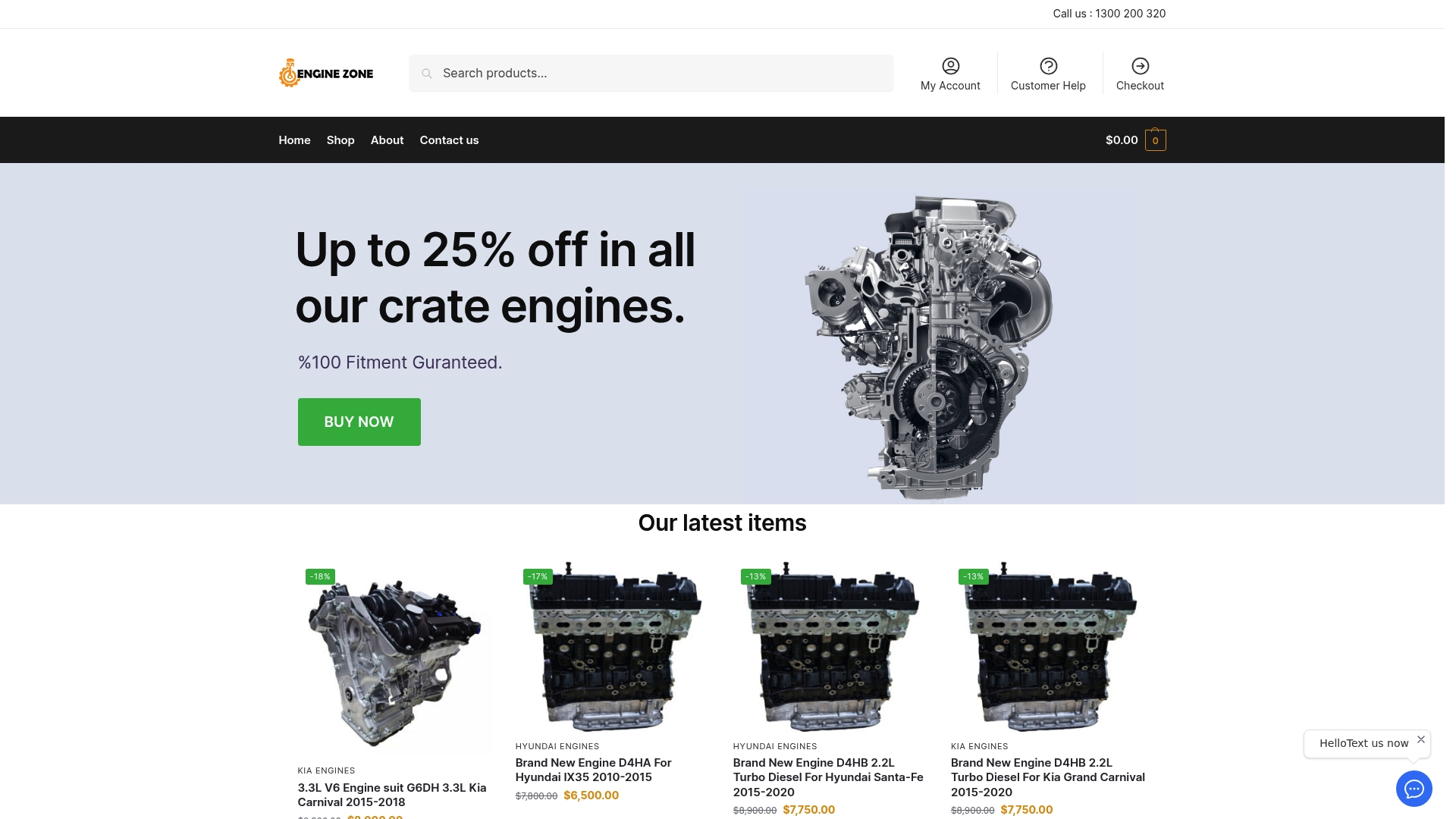
The benefits of new crate engines go beyond reliability. Factory-fresh units reduce installation time because they arrive ready to fit, which directly lowers your labour bill. For Hyundai and Kia owners, Engine Zone’s certified engine options include model-specific fitment assistance and Australia-wide delivery. Discounts of up to 25% are available on selected units, and every purchase is backed by SSL-secured checkout and warranty support. Browse the current range at Engine Zone to find the right unit for your vehicle before your next workshop booking.
FAQ
How much does engine replacement cost in Australia?
Full engine replacement in Australia costs between $3,096 and $11,097 depending on vehicle type, engine condition, and workshop location. Diesel engines and complex vehicles sit at the higher end of that range.
What is the cheapest engine replacement option in Australia?
A used engine sourced from a wrecker is the lowest-cost option, typically $1,200 to $3,500 for the unit, but it carries the highest risk of unknown wear. A reconditioned engine with a warranty offers better long-term value for most owners.
Does car insurance cover engine replacement in Australia?
Standard comprehensive insurance does not cover engine failure caused by mechanical breakdown or wear and tear. Cover only applies if the failure results from a defined insured event such as flood or collision damage.
How long does an engine replacement take at an Australian workshop?
Most replacements take 2 to 7 days from drop-off to collection, including removal, installation, and testing. Engine availability is the most common cause of delays beyond that window.
Is it worth replacing an engine or buying a new car?
If the engine replacement cost exceeds 60 to 70 per cent of the vehicle’s current market value, replacing the vehicle is generally the sounder financial decision. For newer or low-kilometre vehicles, a quality reconditioned or crate engine is almost always worth the investment.