
When Should I Replace My Engine?
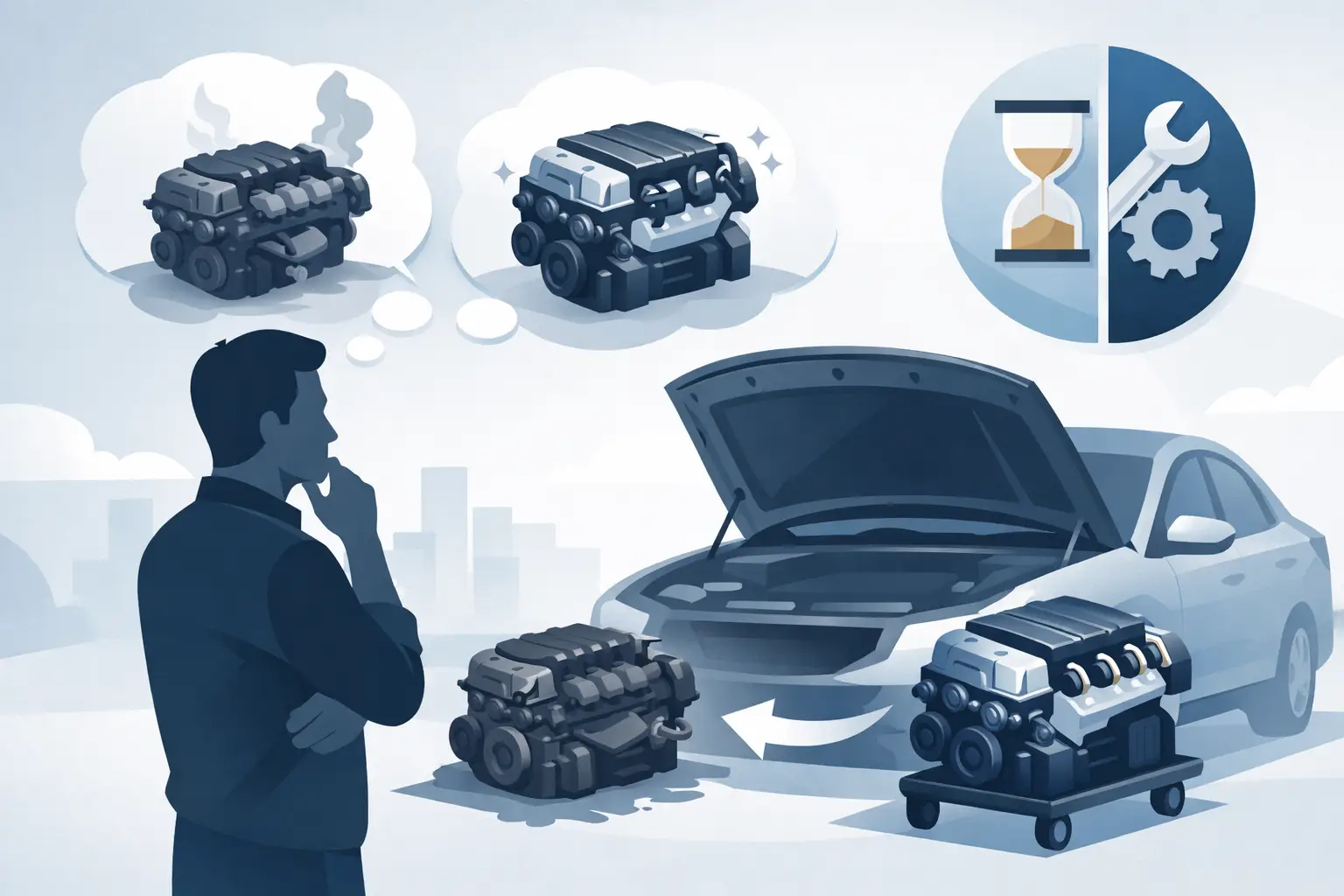
The question usually comes up after a nasty phone call from the workshop. The quote is bigger than expected, the car is off the road, and now you are asking, when should I replace engine problems instead of patching them up again? If your Hyundai or Kia has serious internal damage, recurring failures, or repair bills that keep stacking up, replacing the engine can be the more practical move.
A lot of owners hang on too long because they hope the next repair will be the last one. Sometimes that works. Often it does not. Once an engine starts showing signs of major wear or failure, the real issue is not just the next bill – it is downtime, reliability, and whether you can trust the vehicle once it is back on the road.
When should I replace engine damage instead of repairing it?
The short answer is this: replace the engine when the cost, risk, and inconvenience of repeated repairs outweigh the value of fitting a correct replacement. That sounds simple, but in practice it depends on what has actually failed.
If the engine has thrown a rod, cracked the block, suffered severe bearing damage, overheated badly enough to warp components, or lost compression across multiple cylinders, you are generally past the point of a minor fix. Yes, a rebuild may still be possible, but that does not always make it the best option. Rebuilds can turn into open-ended jobs once the motor is stripped down and more damage is found.
A replacement engine is often the cleaner path when you want predictable results. You know what you are buying, you can match the right engine code, and you can get the vehicle back into service faster.
The signs your engine is near the end
Not every rough idle or warning light means the engine is finished. But some signs should stop you from throwing money at small repairs.
Constant oil consumption is one of them. If your vehicle is burning through oil at a rate that is no longer reasonable, especially with visible smoke or fouled plugs, internal wear may be advanced. Worn piston rings, valve stem seals, and cylinder wear can all point to a tired engine.
Knocking noises are another major warning. A light top-end tick can sometimes be manageable. A deep bottom-end knock is different. That often suggests bearing damage, and if that lets go completely, the engine can fail without much notice.
Repeated overheating is also serious. One overheating event can be enough to damage a head gasket or warp the cylinder head. If the engine has overheated more than once, you have to consider whether the long-term reliability is already compromised.
Low compression across multiple cylinders matters too. If the engine cannot hold compression properly, performance drops, fuel use can worsen, and starting becomes harder. More importantly, it usually points to wear that is not cheap to fix.
Then there is catastrophic failure – a snapped timing component, seized engine, metal in the oil, or a hole in the block. At that point, the conversation usually shifts from repair to replacement very quickly.
When repair bills stop making sense
This is where many owners get stuck. They have already spent money on coils, sensors, gaskets, cooling parts, injectors, or turbo-related repairs, and they feel committed. But money already spent should not decide the next move.
What matters is what happens from here. If the next repair is still unlikely to restore long-term reliability, it may be better to stop and replace the engine properly. This is especially true for work vehicles, family cars, and trade vehicles where downtime costs more than the repair itself.
A replacement engine tends to make more sense when the alternative is a long list of major internal work. Machining, labour, strip-down time, replacement internals, and the usual unexpected extras can push a rebuild well beyond the original estimate. In some cases, by the time you approve all the extra work, you could have fitted a new replacement engine with clearer fitment and less delay.
The age of the vehicle matters – but not in the way people think
Plenty of drivers assume an older vehicle is never worth an engine replacement. That is not always true. The better question is whether the rest of the vehicle is still worth keeping.
If the body is straight, the transmission is sound, the suspension is serviceable, and the car suits your needs, replacing the engine can be far cheaper than replacing the whole vehicle. That is especially relevant in Australia, where used car prices and changeover costs can still sting.
On the other hand, if the vehicle has major issues beyond the engine – rust, gearbox problems, electrical faults, accident history, or neglected servicing throughout – an engine replacement may not be the smartest spend. The engine could be fresh while everything else is ready to ask for money next.
So when should I replace my engine in an older Hyundai or Kia? Usually when the vehicle is otherwise solid, the fitment is clear, and you want a reliable outcome without starting over with another unknown used car.
Rebuild, used engine, or brand new replacement?
This is where trade-offs matter.
A rebuild can be worthwhile if you have a trusted workshop, a known block worth saving, and enough time for the job to be done properly. The downside is uncertainty. Once the engine is opened up, more faults can appear. Parts availability, machining delays, and labour costs can stretch the job and the budget.
A used engine can look cheaper up front, but it comes with more risk. You are relying on the history of an engine you did not own, often with limited visibility on maintenance, kilometres, and wear. If you are unlucky, you can pay for the engine, pay for fitting, and still end up with another problem.
A brand new replacement engine costs more than a random second-hand motor, but for many buyers it is the lower-risk option. You get a fresh unit, correct application matching, and far better confidence in long-term reliability. For workshops and owners who want fewer surprises, that matters.
Fitment is not a small detail
One of the biggest mistakes buyers make is focusing only on price and forgetting compatibility. Engine code, fuel type, turbo or non-turbo setup, ancillaries, and model-year differences all matter. A Hyundai or Kia engine that looks right at first glance is not always the correct match.
That is why replacing an engine should never be treated like buying a generic part. Getting the right fit from the start saves time, avoids workshop headaches, and reduces the chance of paying twice. Specialist support matters here because one incorrect assumption can turn a straightforward replacement into a mess.
For buyers who want a simpler path, this is where a specialist supplier such as Engine Zone can remove a lot of guesswork with model-specific matching, expert support, and fitment certainty.
The cost question everyone asks
Nobody replaces an engine for fun. The decision usually comes down to whether the spend is justified.
If replacing the engine gives you several more years from a vehicle you already know, it can be a smart financial call. Registration, insurance familiarity, recent tyres, suspension work, or a well-kept interior all add weight to keeping the car. Compared with buying another vehicle that may come with its own hidden issues, a replacement engine can be the more controlled investment.
But if the numbers are close to the value of the car and the vehicle has other looming faults, it is fair to step back. The right answer is not always replacement. It depends on total vehicle condition, expected lifespan after repair, and how critical reliability is for your day-to-day use.
A practical way to decide
Ask yourself a few plain questions. Is the engine damage major and internal? Have repair attempts already started adding up? Is the rest of the vehicle in good enough condition to justify the spend? Can you source the exact engine you need with confidence? And do you want a result you can rely on rather than another round of workshop guesswork?
If most of those answers are yes, replacing the engine is usually the better decision. If the vehicle is tired in every area and the engine is just one more problem, it may be time to move it on.
The best time to replace an engine is before repeated failures drain your budget and patience. Once the signs are clear, acting early usually saves more grief than squeezing one more repair out of a motor that is already telling you it is done.