-17%
Kia Engines, Petrol Engines
Brand New G4EE 1.4L Petrol 4 Cylinder Engine for Kia Rio JB 2005-2011
$3,650.00
$4,400.00

Original price was: $4,000.00.$3,350.00Current price is: $3,350.00.
5 in stock
This listing is for a brand-new G4LC 1.4L petrol engine suiting the Kia Stonic YB, the compact SUV Kia sold in Australia from 2018 to 2024. Like every engine we supply, it is built to OEM fitment specification, upgraded internally where the original design needed it, and hot and cold tested before crating.
The Stonic occupies a practical spot: hatchback running costs with a little extra ride height and boot space. Owners tend to keep them for school runs, commutes and weekend errands, which means an engine failure hits a car that is otherwise perfectly suited to its job. Rather than trading away a tidy YB or trusting a secondhand motor, a new engine restores the car for a known price.
The package includes free Australia-wide freight, a VIN compatibility check before dispatch and a 12-month or 50,000 km parts warranty. Call 1300 200 320 for anything this page does not answer.
Under the Stonic's bonnet, the G4LC is a small-capacity workhorse from the Kappa engine family developed by Hyundai and Kia for their light-car range. It is a 1.4-litre inline four-cylinder running multi-point fuel injection, dual overhead camshafts and 16 valves.
For an owner watching costs, the engineering choices are the right ones. Timing is by chain, removing the belt replacement bills that older small engines demanded. Multi-point injection sprays fuel into the intake ports, which keeps the back of the valves washed and avoids the carbon accumulation some direct-injection engines develop. Nothing about servicing it requires a dealership; the design is familiar territory for any suburban workshop.
When one of these engines does die, the story is usually mundane. A slow coolant leak that finally let the temperature spike. Oil changed on a budget schedule instead of the book. General wear after years of hard cold starts and short trips. Whatever the trigger, a small engine that has run its bearings or lost compression is rarely worth machining, because the labour and parts bill lands close to the price of a new engine without delivering one.
This unit removes that dilemma. Every component inside it is new, and the build goes beyond simply repeating the factory recipe: fitment stays OEM, while internals with documented weaknesses in the original design, among them the connecting rods, crankshaft and bearings, are specified at a higher grade. The completed engine is proven on the test stand both cold and hot before it is signed off. What goes into your Stonic is a zero-kilometre engine with documented testing behind it, not a repaired version of somebody else's problem.
Compatibility covers Kia Stonic YB models delivered between 2018 and 2024 with the factory G4LC 1.4L petrol engine. Some Stonic variants used other engines, particularly the smaller turbocharged unit offered in certain grades, so verification matters more than usual here. Every order is confirmed against the vehicle's VIN before dispatch; supply the 17-character number and we match the engine to your car in writing, free of charge and before any freight is arranged.
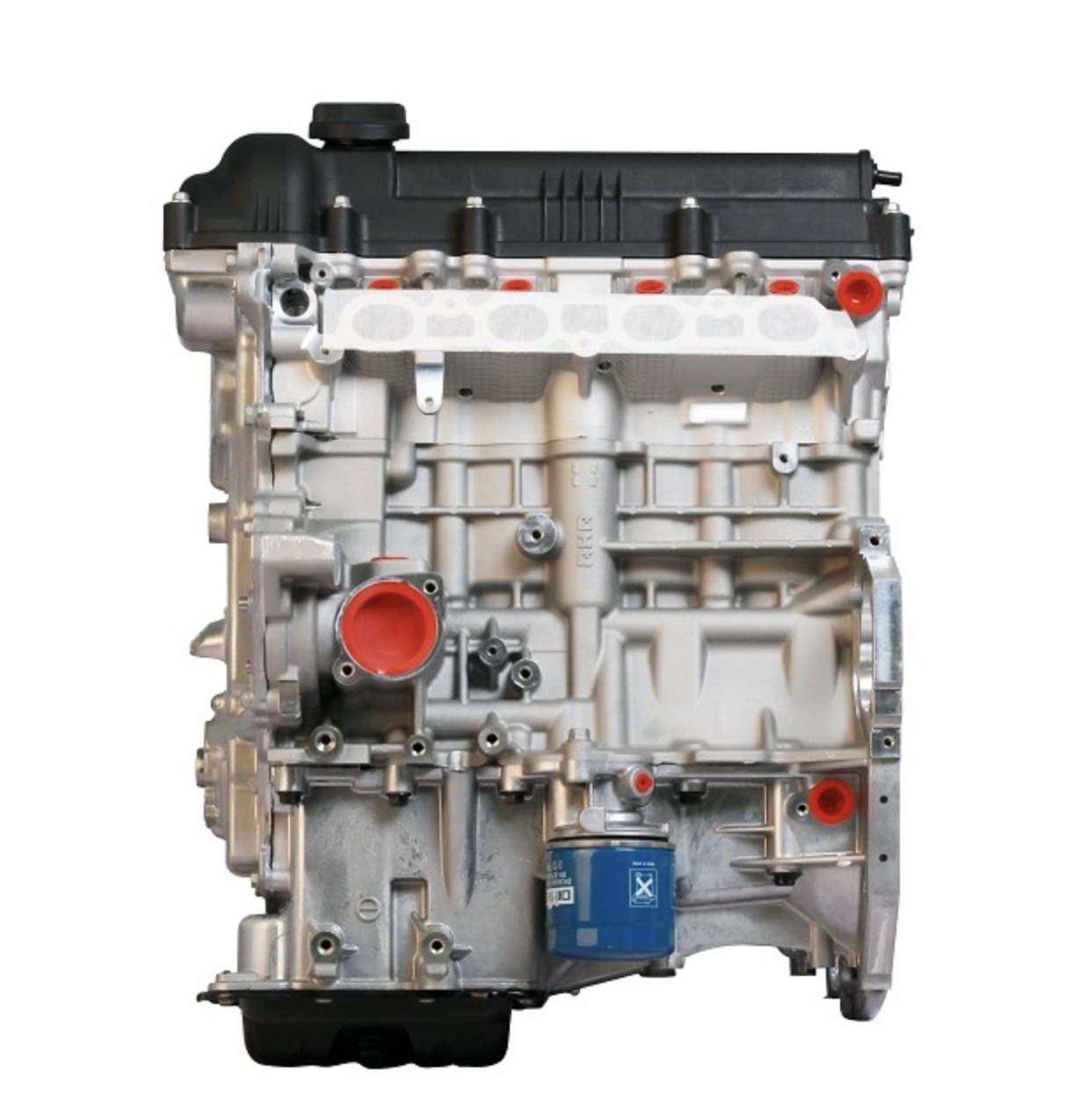
The engine is supplied as a long engine assembly. In practical terms, that is the block and head built up with every internal part installed: crank, rods, pistons, camshafts, valvegear and oil pump, all torqued and sealed to specification on the bench.
Left off deliberately, and carried over from your original engine at fitment, are the external items:
These components live outside the engine and are usually in serviceable condition even when the engine itself is finished. Reusing them is how a long engine keeps the total replacement cost contained, and swapping them across is routine work during the installation itself.
Every engine ships with a heat tab attached to the block. The tab is a one-way indicator: once the engine has been overheated it shows permanently, and overheating damage falls outside warranty cover. Before installation day, it is worth having the workshop test the Stonic's radiator, cap, thermostat and fans so the new engine inherits a cooling system that can actually protect it.
The process runs in a fixed order for good reason. VIN first: call 1300 200 320 or send it through with your enquiry, and wait for written confirmation of fitment. Payment and dispatch follow. The crated engine then travels at no freight cost to any Australian address that can take a pallet delivery, which in practice is usually the installing workshop.
Fitting is a job for a qualified mechanic, and the warranty depends on it. Beyond the mechanical swap and parts transfer, the details that decide the outcome are fluids and cooling: correct-grade oil, fresh coolant properly bled, a verified thermostat and a pressure-tested system. Ask the workshop to document what was replaced; it is useful history for the car and supporting evidence if a warranty question ever arises.
Cover is 12 months or 50,000 kilometres from purchase, whichever is reached first, on the parts supplied. The two firm conditions are professional installation and no overheating, the latter policed by the heat tab. Neither is difficult to meet with a healthy cooling system and a competent installer.
Once the Stonic is back on the road, ease it in. Vary engine load for the first several hundred kilometres, avoid labouring it up hills at low revs, and change the oil early. A new engine treated this way settles into exactly what a YB owner wants: a quiet, economical unit that goes back to being ignored.
Common questions about this engine. Have a different question? Call us on 1300 200 320.
New in the full sense: new castings and new internals throughout, built to OEM fitment specification. It is not a rebuild, exchange unit or reconditioned engine. Hot and cold testing after assembly verifies compression and oil pressure, so the engine arrives with a documented clean bill of health and zero kilometres.
No, and that is why the VIN check exists. It fits Stonic YB models from 2018 to 2024 that were built with the G4LC 1.4L petrol engine. Stonics fitted with a different engine, such as the small turbocharged option in some grades, need a different replacement unit. We confirm your variant before anything ships.
Provide your VIN, the 17-character identifier on your registration papers and build plate, by phone on 1300 200 320 or online. We check it against this engine's specification and confirm the match in writing. The check is free, and no engine is dispatched without it, which protects you from an expensive near-miss.
The long engine is the complete internal package: block and cylinder head assembled with crankshaft, pistons, connecting rods, camshafts, valves and oil pump. External parts such as manifolds, injectors, alternator, starter, sensors and the flexplate or clutch are excluded and swap over from your existing engine during the installation.
Yes, the camshafts are driven by a timing chain rather than a belt. That removes a recurring service expense, since chains have no fixed replacement interval. The trade-off is that chains depend on clean oil, so sticking to proper oil-change intervals is the single best thing you can do for one.
Yes, in a targeted way. Fitment is strictly OEM, so nothing about installation or running changes. Inside, components that had documented weaknesses in the original design, such as the connecting rods, crankshaft and bearings, are upgraded to higher-grade parts. Your Stonic gets the engine it was designed for, built stronger where it matters.
Fresh oil and filter and new coolant are non-negotiable. A new thermostat, radiator cap and any tired hoses are cheap while the front of the engine bay is apart. Given that overheating voids the warranty, pressure-testing the cooling system before first start is the most valuable half hour of the whole job.
Cover runs 12 months or 50,000 kilometres, whichever comes first, and applies to the parts supplied. Two conditions matter: the engine must be installed by a qualified mechanic, and it must never be overheated, which the fitted heat tab records permanently. Retain your invoice and the workshop's installation paperwork for any claim.
Nothing. Freight is free Australia-wide, regional addresses included. The engine is crated and palletised, so the destination needs to be able to receive a truck delivery, which is why most buyers send it straight to their workshop. Tracking details are passed on once the freight is booked after VIN confirmation.
Low kilometres on a used engine is a claim, not a record. There is rarely proof of servicing, and never proof it was not overheated. This engine is new throughout, tested before dispatch and covered for 12 months or 50,000 km. For a Stonic you intend to keep, certainty is the better buy.
Yes. The Stonic's engine bay holds no surprises, and the replacement is standard engine-out work for a qualified mechanic. Professional installation is required under the warranty terms, so keep the invoice from the workshop. Sharing the transfer-parts list with them beforehand helps the quote and avoids delays on the day.
Cold testing turns the engine before it ever fires, confirming compression, oil pressure and free rotation. Hot testing then verifies how the assembled engine behaves at operating temperature. Every unit passes both stages before crating, meaning faults are caught on the test stand rather than in your car.
Tell us your make, model and year — we'll source and fitment-match the right crate engine for you.
Reviews
There are no reviews yet.